Children, do you have an "invisible friend"?
No one says it, but it is definitely there. It feels like they would respond if you called their name. That child alone was treated with their own taste.
That such an existence did not exist for your child.
When I watch this movie, I feel like something will resonate with me.
What is an 'imaginary friend'?
The movie "Blue Giant" (Original: IF) is an American fantasy movie released in Japan in June 2024.
Supervision/Script: John Krasinski of "A Quiet Place" series. As a producer, he also takes on the lead role, with Steve Carell playing the voice of Blue.
The story features an existence called 'imaginary friend (IF = friend of imagination)'.
The invisible friend born from within a child. In the world of psychology, it is also called an "imaginary companion," and it is a natural phenomenon experienced by many children, mainly between the ages of 3 and 7, during their developmental stages. A survey in North America also reports that about half of children aged 3-7 have such imaginary friends.
As someone who learned Montessori education, this fact was very interesting.
Children, even if not taught by anyone, have the ability to bring out what they feel is necessary from within themselves. I think that the "self-nurturing power" is a beautiful representation of that.
What kind of role does the "imaginary friend" play in the growth of children, and what kind of effect does it have? Regarding the psychological merits and approach, [ Explanation of this. What is an imaginary friend? A crucial "imaginary friend" for the growth of a child's heart. I will explain in detail in the article.
Is forgetting growth?
The core setting of this movie is this.
When children grow up and forget their imaginary friends, their existence is destined to disappear.
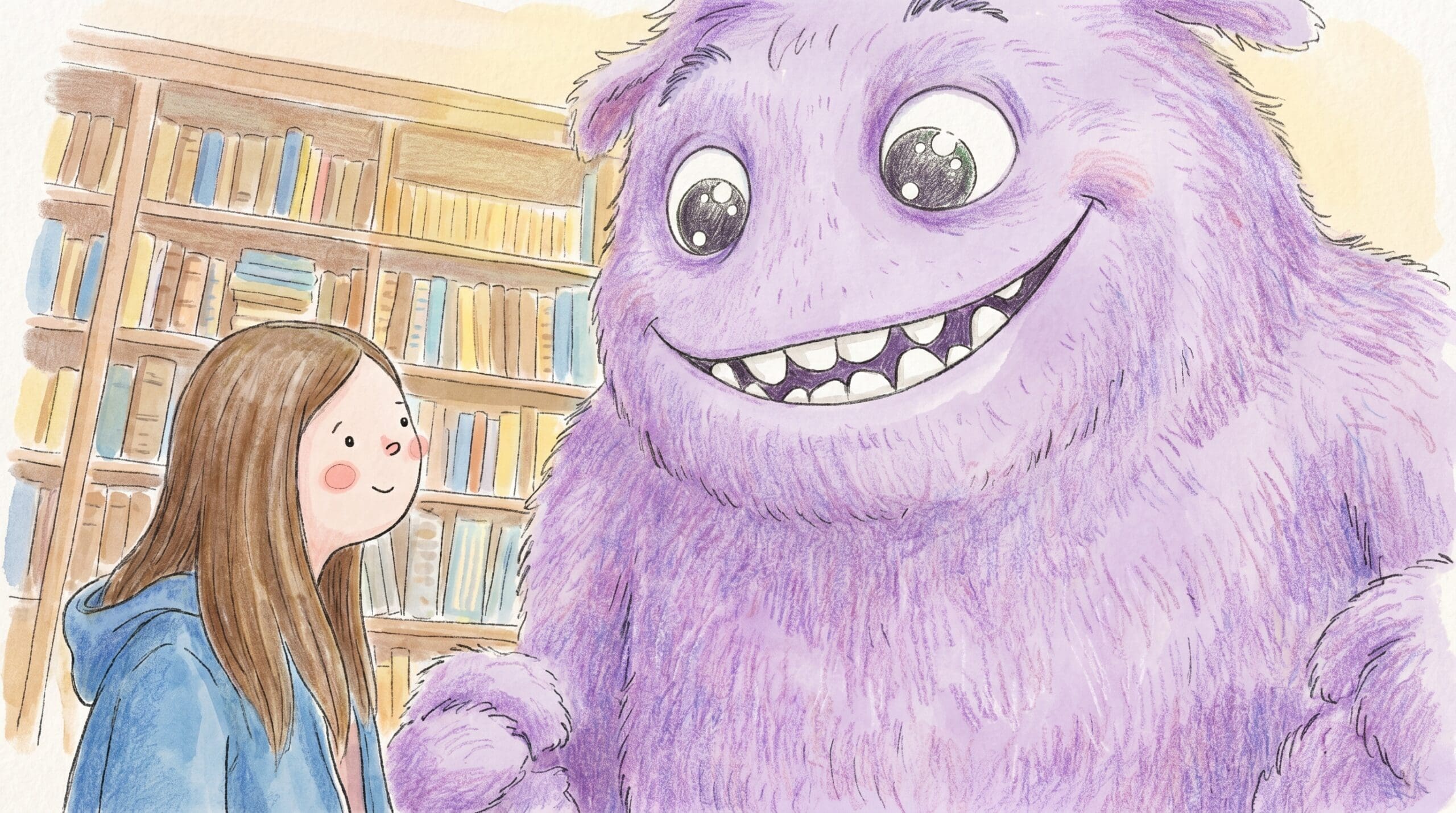
Bee, a 12-year-old girl who lost her mother in her childhood and is now facing the reality of her father's hospitalization, meets a purple, fluffy creature called 'Buru' one day. Buru is an imaginary friend who has been forgotten by the child who gave birth to it and has lost its home. Bee and the imaginary friend IF, who is seen by adults as a lion (Ryan Reynolds), embark on a daring adventure to save the forgotten IFs.
As I watched the movie, I was always thinking about one thing.
"Forgetting things" is said to be the sign of children growing up healthy. As they nurture their human relationships, imaginary friends become unnecessary. That is certainly the case.
But this movie is asking about something else.
Something forgotten is still somewhere.
And how should we do that? I wonder.
We who have become adults, the things we have lost
In the movie, the imaginary friends Karu and Bee, who are the 'original friends' of IF, and the adults who gave birth to those IFs, go to meet them.
A businessman who embraces loneliness in front of his presents. People who are tired and have no one to turn to. To the adults who live thinking "I can't show my weakness," it's for them.
Looking at that scene, I was suddenly shaken.
To whom did you last say "I am a great husband."
Something even bigger.
I wonder if I am being properly conveyed to my child as "I am a great husband."
The word 'Daishihai' (great love) spoken to children is not just a metaphor, I believe.
A declaration of "Even if you fail, even if you are lost, even if you cry, you are a great husband." A statement of trust.
That is what becomes the soil that nurtures children's self-affirmation.
Children need "another self" within themselves.
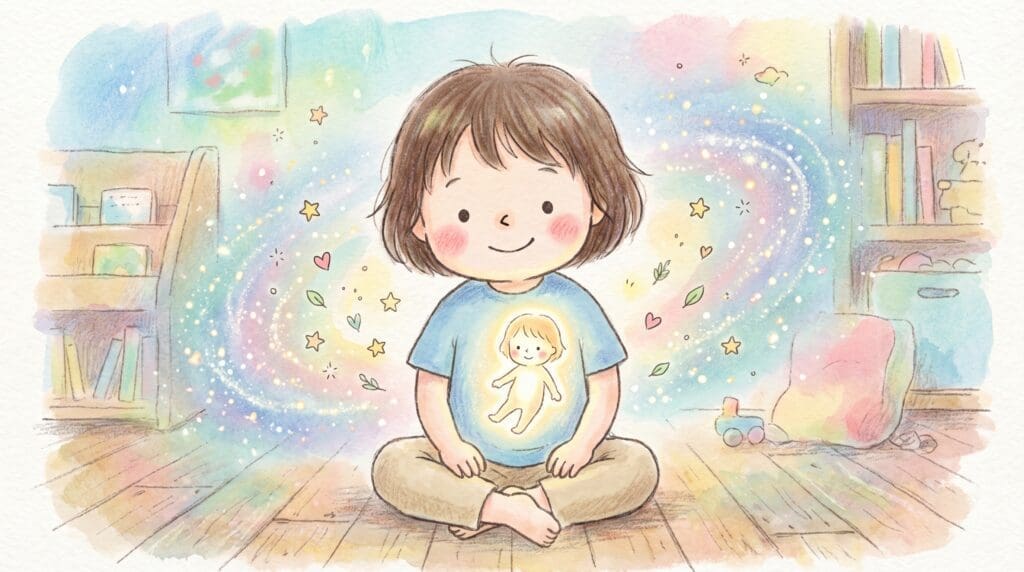
In Montessori education, we place great importance on signs that emerge from within the child.
An imaginary friend is just that, I think.
Children, when lonely, when uneasy, or when they want to share something, bring forth that existence from within themselves. The ability to create 'someone who acknowledges oneself' and 'someone who accepts one's feelings' from within. That is the rich inner world that children possess.
In psychological research, children with imaginary friends are reported to have a well-developed ability to imagine the feelings of others. Children who create 'more than one' within themselves can also imagine the inner world of others.
That is to say, children having imaginary friends is not a "troubling phenomenon" or a "worry."
It is the appearance of children trying to support themselves with their own strength.
What we adults should do is not to deny that world or be incredulous, but to accept it with a gentle "Oh, is that so?"

Do we not let go of "creativity"?
What struck me most in this movie was the scene where IF, who has reached the limit in front of a business presentation, is drawn with such closeness to the adults who are beside them.
I would like to see the movie, but what the movie is trying to convey through that aspect is, quite frankly, something that is certain.
From children who possess "creativity," adults have something to learn.
At that moment, something was naturally born from within myself. For adults like us who can no longer do that, IF will quietly say "I am a great husband."
This is also a message to us who are involved with children.
Do you have the "power to create" in children?
Do the words of adults like "Do it this way," "You should do it this way," and "That's strange" not sow seeds in the rich inner world of children?
When children talk about their imaginary world, what kind of faces do adults make?
Are you being told, 'What kind of child is that?'
Do you hear stories of 'invisible friends' and are you told?
I myself, while raising two daughters, have been stumped by this question many times.
In the midst of a busy daily life, children sometimes say, "Well, listen." At that time, are you facing them properly?
After watching this movie, I thought I should be a little more careful about how to approach the "things you can't see" for children.
Let's say it's imaginary. Let's say, "There's no such thing," and it doesn't register in the eyes of adults.
If children feel that they exist, that feeling is real.
That what is born within the child is not to be swallowed by the conformity of adults.
That is, the act of respecting children, the most small and most important input.
What remains after watching the movie
The movie 'Buru: Kimihachi' is a movie without flashy action or dramatic development.
The flow of the story is predictable, and many such feelings are seen. There are also voices saying that the theme does not convey a view of the IF world.
However, I think there is a reason why it touches the hearts of many people.
Someone, somewhere, needs the words 'Kimi wa Daishihai' (You are my great love).
Not just children, but adults too.
And the one who wants to convey that message the most is, of course, to those children who are together every day.
'Kimihachi. I'm watching you properly.'
Does that one word take root deeply in children?
This movie gently, but surely teaches us that.
Today, have you conveyed to your child that they are a "great husband"?
Not with words. Not with a smile, not with a hug, not even by meeting eyes.
Within the child, we will gradually build up the foundation of "I am a great husband."
It is one of the most important things that children can do in their upbringing, I believe.
The movie "Blue Giant" (Original: IF) will be released in Japan on June 14, 2024. It is also available for viewing on various animation distribution services.