Why is the yellow hat uncle in "Curious George" the ideal parenting model supported by many parents?
Never getting angry with the mischievous George and respecting his curiosity gives us great tips for modern parenting.
In this article, we will unravel the secrets of building a relationship of trust between parents and children from the picture book series that has been loved for over 80 years. We will introduce ideas that can apply the "yellow uncle method of dealing with children" to actual childcare scenes, as well as specific ways to talk to children who turn their mistakes into opportunities for growth. Like the always calm and tolerant uncle in the yellow hat, why not learn how to engage with them while respecting their children's wishes while fostering healthy curiosity?
What is the "Curious George" series?
"Curious George" is a picture book series that originated in the United States in 1941 and tells the story of George, a curious baby monkey, and Uncle in a Yellow Hat. It has been popular in Japan since the 1950s, and it is very young Children It is loved by a wide range of generations, from adults to adults.
From 80-year-old picture books to anime
"Curious George" is a picture book series created by Margaret Ray and Hans August Ray. The couple, who fled the chaos of World War II and moved to the United States, published their first "Curious George" in 1941. Since then, seven picture books have been written by the original authors, and sequels have been drawn by other authors.
In Japan, it was translated and published by Gospel Museum Bookstore under the title "Hitoma Nekozaru", and continues to be a popular program today. This anime is based on the popular PBS series, and the anime series has been broadcast on NHK E-TV since 2007, and as of 2024, it is a long-running program in Japan, celebrating its 18th year of broadcasting.
MY STELLA The "Curious George" series, which is supported by generations, is not just content for children, but also combines educational elements and fun. It has been translated into languages around the world and has now established itself as an international character.
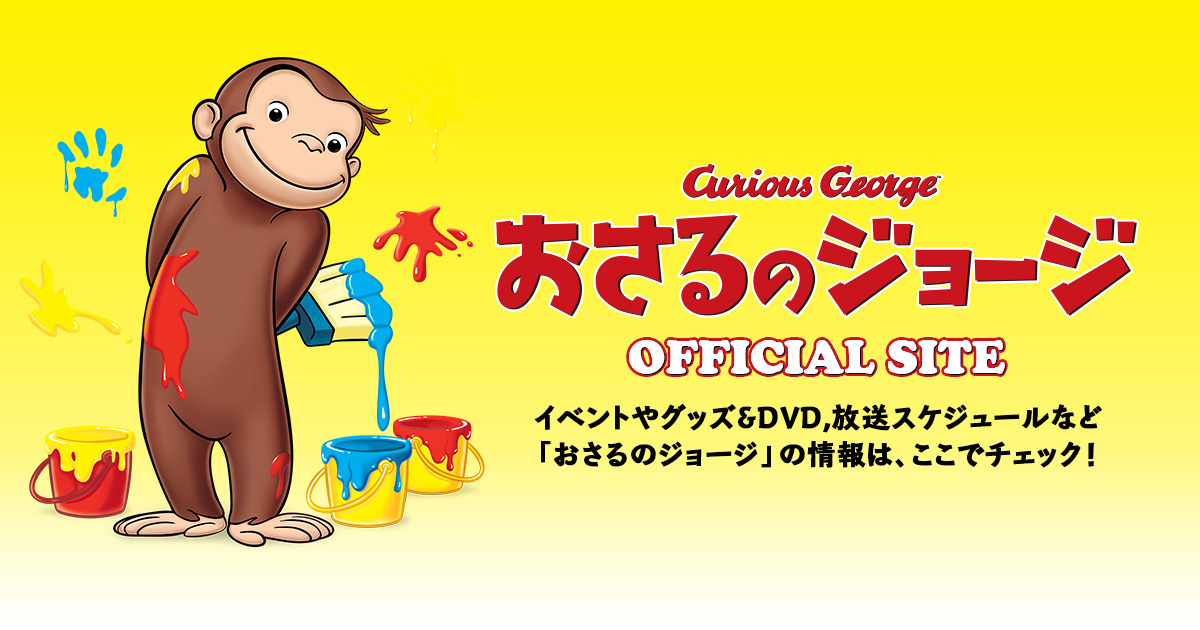
Main characters: George and Uncle in the Yellow Hat
| Character | Features | Role |
|---|---|---|
| George | A curious baby monkey. There is no tail. They can't speak words, but they can understand human language. | The main character. Repeating various adventures and failures out of curiosity |
| Uncle in the Yellow Hat | A gentleman with a distinctive yellow hat. George's guardian presence. | The role of watching over and guiding George. Don't blame George for his mistakes, lead him to learn |
George is a curious baby monkey who met his uncle in Africa and came to the big city by boat with him. Although they cannot speak words, they can understand human language, and their vigorous curiosity leads them to various adventures. Sometimes they cause problems out of curiosity, but in the end, they are depicted solving them with ingenuity.
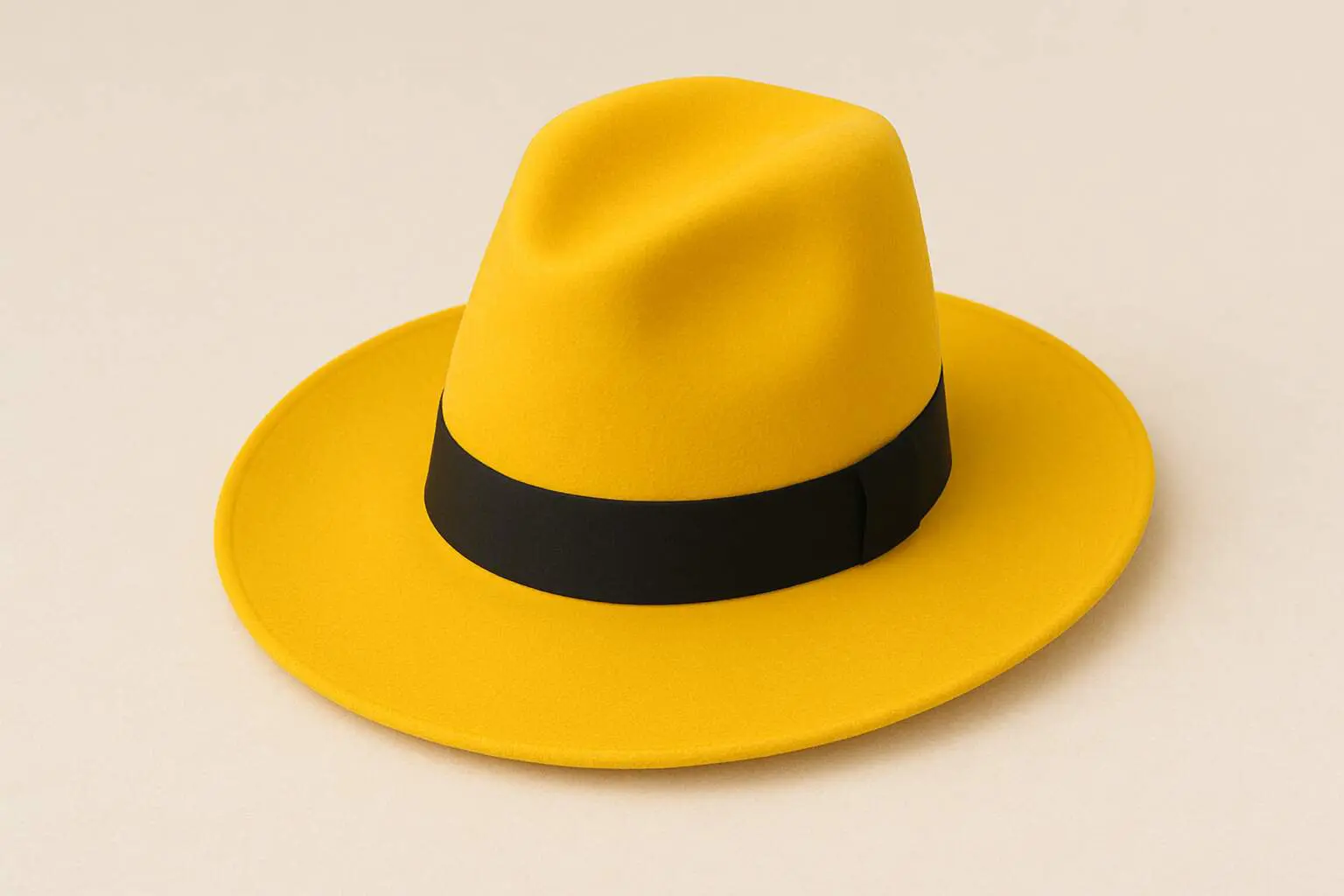
On the other hand, " Yellow Uncle The Uncle in the Yellow Hat, also known as "The Man with the Yellow Hat," is a guardian who watches over George. In the original picture book, he is described as "The Man with the Yellow Hat," and in Japan anime, he is simply called "Uncle." He is always calm and watchful of any trouble George causes, never getting angry.
The relationship between these two people is unique, as they are both parents and children, and they are friends. NHK official website However, it is introduced as a "story of friendship and adventure". This relationship is a major factor in winning the hearts of many viewers.
What is the name of the yellow uncle?
Curious George's picture book series, movies, and TV anime "Uncle in the Yellow Hat" is a character loved by many children. However, this calm and caring character for George did not have an official name for a long time. Also, the original picture book written by Margaret Ray and H.A. Ray never revealed its name.
For the first time in the movie "Curious George" released in 2006, this The man in the yellow hat was given the name "Ted". The name was also adopted in the TV series, and his full name is "Ted Shackleford".
This naming was an interesting development for longtime fans. The yellow hat uncle's name made his relationship with George more intimate and tangible. However, for many readers and viewers, he is still affectionately known simply as "Uncle in the Yellow Hat".
Why is the man in the yellow hat so popular?
The uncle in the yellow hat in "Curious George" has gained significant attention in recent years, especially among the child-rearing generation. His gentle response and the way he treats his child, George, resonate with parents who are struggling with parenting today.
A symbol of "childcare without anger" attracting attention on social media
One of the most talked about characteristics of "Uncle in the Yellow Hat" is that he doesn't get angry. No matter what pranks George does, no matter how big a mistake he makes, he will never be angry. This attitude has been spread on social media with hashtags such as "#怒らない育児" and "#黄色い帽子のおじさん育児法", and has resonated with many parents.
On Twitter (X) and Instagram, comments such as "I want to be as calm as an uncle in a yellow hat" and "A sample of the ideal way to treat children" are posted every day.
| Trends in SNS post content | Author Attributes |
|---|---|
| "I can't help but get angry like an old man in a yellow hat..." | Parents with preschoolers |
| "The response of the man in the yellow hat is realistic? | 30s raising children |
| "Today I tried the uncle in the yellow hat." | Childcare Blogger |
Especially in situations where they feel tired of raising children, many parents The ideal adult figure I am quoting the uncle in the yellow hat as a reference.
Reasons for support from the child-rearing generation
The reason why Uncle in the Yellow Hat is supported by the child-rearing generation is not just "not angry". His response includes a number of elements that are consistent with modern parenting theory.
Official website According to the authors, H.A. Ray and Margaret Ray had an educational philosophy of "valuing children's curiosity". This philosophy is reflected in the character setting of Uncle Yellow Hat.
The main reasons why the parenting generation favors him are:
- Respecting children's curiosity : I accept George's inquisitiveness as much as possible and watch over him from a safe distance.
- Calmness that doesn't get emotional : It is said that the attitude of not getting emotional even when a problem arises and thinking about solutions is helpful
- A perspective that sees failure as an opportunity to learn : Rather than scolding George's failures, he finds something to learn from them
- How to interact with children to foster their independence : The attitude of not only saying "no" but also presenting appropriate options is evaluated
Especially from the perspective of "cultivating self-esteem", which is emphasized in modern parenting, the way the uncle in the yellow hat treats him is ideal. Professor Megumi Sato, who specializes in child-rearing psychology (article by Benesse Institute of Education) It has been reported that admitting rather than scolding increases children's self-esteem.
In addition, as an adult attitude conveyed to children through picture books and anime, the calmness and problem-solving skills of the man in the yellow hat give children a sense of security. Many parents wish to be this kind of adult and get hints for raising children from his appearance.
In this way, the uncle in the yellow hat is more than just an anime character, and is gaining the support of many parents as an "ideal caregiver image" that is in line with modern parenting theory.

 Po Chip
How to interact with children learned from the response of the man in the yellow hat
In the "Curious George" series, many parents admire the "Uncle in the Yellow Hat". The way George never gets angry no matter what pranks he tries and always responds calmly gives us a lot of tips for modern parenting. According to parenting experts at MY STELLA, respecting children's curiosity is essential for healthy growth. Now, let's take a look at the specific ways you can learn from the man in the yellow hat.
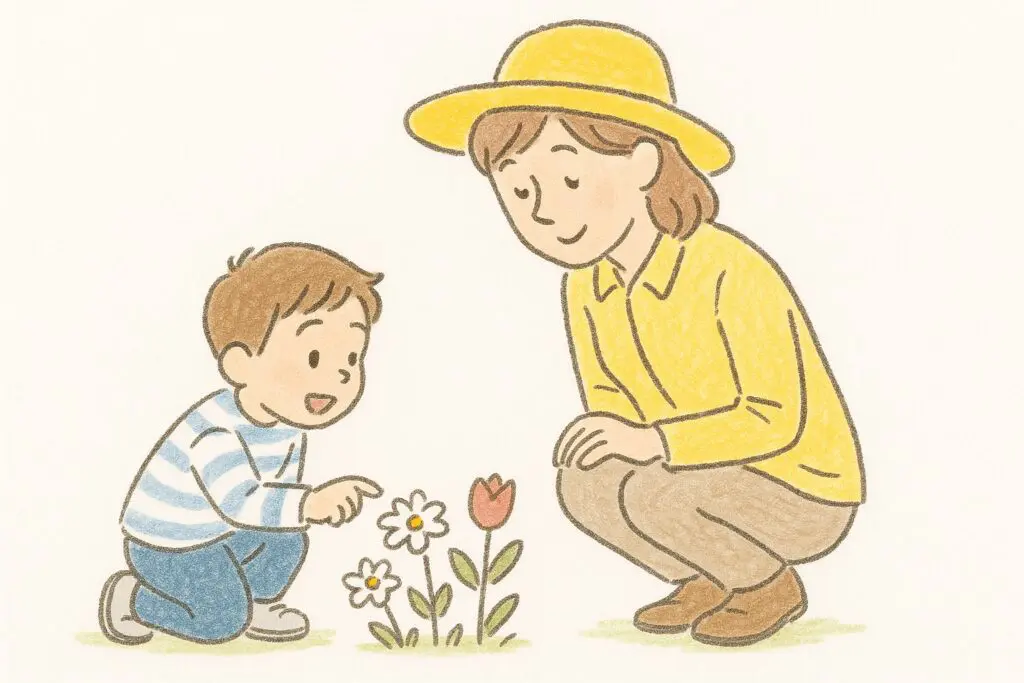
Attitude of valuing curiosity
George is a curious child. That curiosity can sometimes cause big trouble, but the man in the yellow hat never denies George's curiosity. Rather, he uses that curiosity as an opportunity to learn to encourage George to grow 。
What has been consistent since the early days of the picture book "Curious George" series is this "attitude of valuing curiosity". Child's "Why?" and "Why?" By answering the question politely without any hassle, you can develop your motivation to learn.
| NG support | Uncle-style correspondence |
|---|---|
| Scold, "Just be naughty!" | "Why did you want to do that?" |
| Deny it, saying, "You can't do that!" | "It's more fun this way," he suggests an alternative |
| Limit "Don't touch it anymore!" | "I'll teach you how to touch safely," he said. |
Communication that respects the child's will
Another characteristic of Uncle in the Yellow Hat is his respectful communication of George's wishes. By listening carefully to his children and acknowledging their feelings before responding, George feels that he is valued 。
For example, when George tries something and fails, Uncle never says, "That's why I told you." Instead, you say, "It was hard, what do you think will work next time?" I take an approach that makes George himself think.
Respecting children's wishes plays an important role in the development of self-esteem and autonomy. The man in the yellow hat naturally practices this principle, as a result of which George feels comfortable expressing his thoughts and being able to experiment with them.
Many parents who are raising children feel The stress of "not listening to what the child says" In fact, it can be reduced by communicating in a way that respects the child's wishes. It is also a good idea to watch "Curious George" with your children through picture books and anime and discuss the response of the man in the yellow hat.
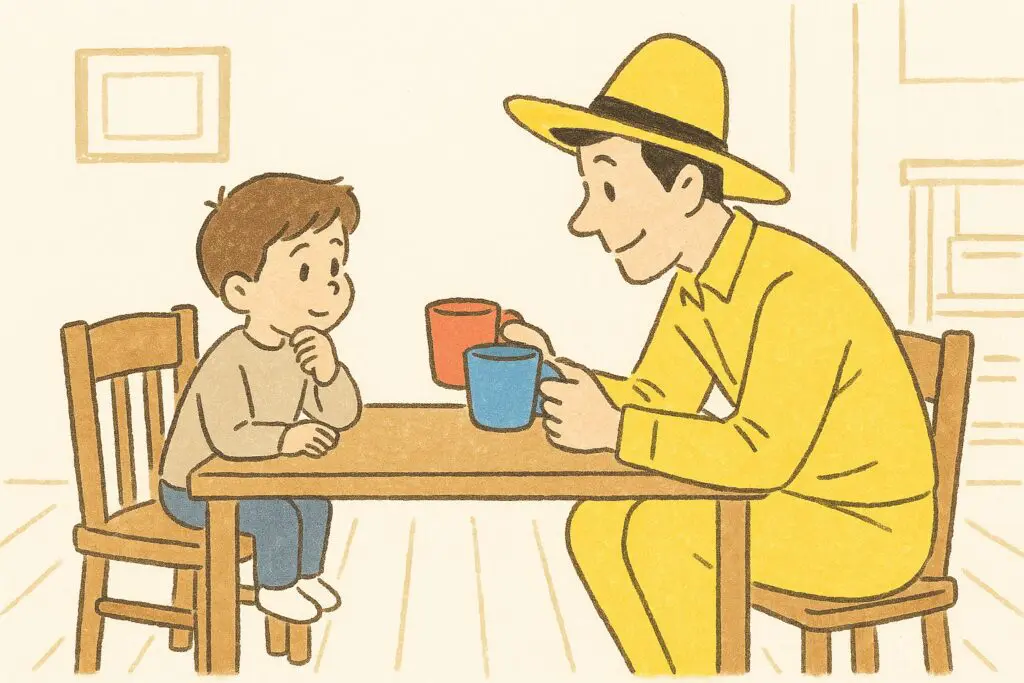
| Communication Ideas | Specific examples of words |
|---|---|
| Give a choice | "Which one is better, a blue cup or a red cup?" |
| Acknowledge your feelings | "I understand how frustrating you feel, how can I feel better?" |
| Add an explanation | "This tool is dangerous, so let's use it together. |
| Incorporate your child's suggestions | "That's an interesting idea, let's try it." |
If you observe the response of the man in the yellow hat, you can see that he always values the "why". When a child wants to do something, it is not just about allowing or prohibiting it, but by being close to the "why" of that problem, we can respond more appropriately. This is a very helpful attitude in real parenting.
As pointed out in the childcare column of MY STELLA, valuing children's curiosity and trying to communicate with respect for their intentions is an essential element in building a relationship of trust. From the relationship between Uncle in the Yellow Hat and George, we adults can learn a lot.
Practice! How to deal with the yellow hat
When watching the "Curious George" series, I am impressed by the scene where the uncle in the yellow hat always responds calmly to the trouble George causes. This "God Response" is packed with many points that parents and childcare workers who are raising children can learn. Here, through specific episodes, let's learn how to deal with the yellow hat man and apply it to our daily lives.
Learn with quizzes: "To find the stars"
The episode "To Find the Stars" depicts the uncle in the yellow hat and George going out for astronomical observation. From this episode, let's think about how to communicate with children.
What to do when you have too much luggage
When he goes to stargazing, George tries to take a lot of luggage that he doesn't need. How did the man in the yellow hat respond at this time?
- I can't bring that much! Make it a little.
- I was stuck in a lot. It's heavy, so I'll take it for you.
- It's not that far. You can bring toys and snacks. Let's leave the rest behind.
The correct answer is (3). The uncle in the yellow hat respects George's feelings but makes realistic suggestions. He does not completely deny the child's desire to take it, but finds a compromise by acknowledging some of it It is. Children feel relieved when their feelings are acknowledged.
How to balance children's needs and reality
In the same episode, George is discouraged by a cloudy sky with no stars in sight. Learn how to bridge the gap between children's expectations and reality from the response of the man in the yellow hat at this time.
When George learns that he can't see the stars, he looks disappointed. At this time, the man in the yellow hat responded as follows.
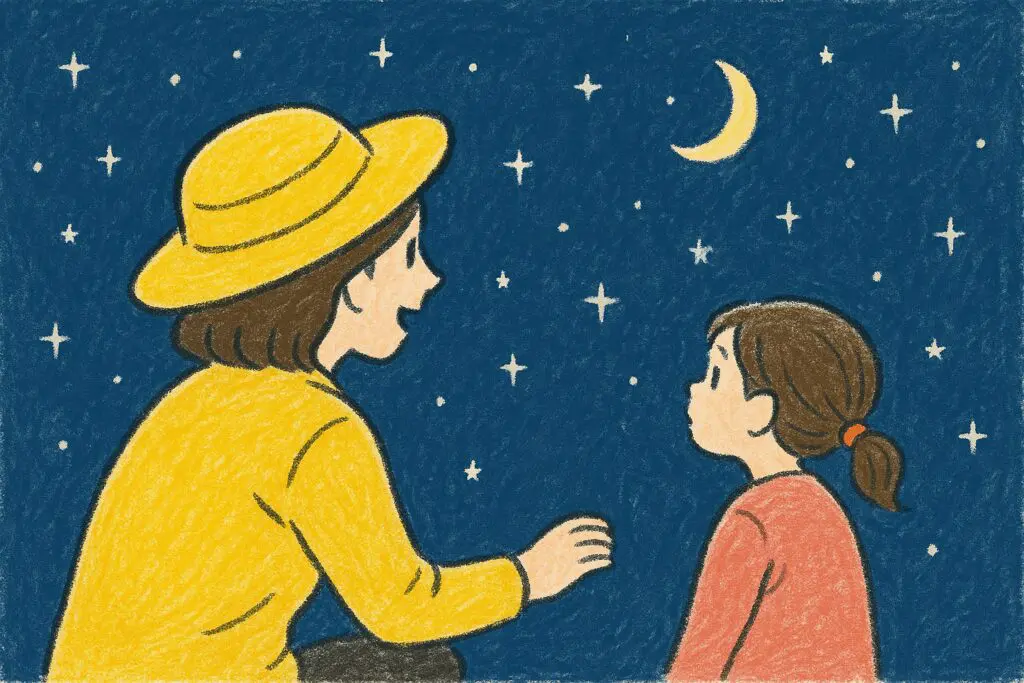
"I can't see the stars, but let's find another fun today.
The key points of this response are as follows:
- Don't deny your child's disappointment, accept it
- Suggest alternatives and find new fun
- Show how to make effective use of the tools you bring
The man in the yellow hat always tries to be calm and positive.
Application ideas in everyday life
Here are some ideas for applying the response of the man in the yellow hat to your daily life.
| Scene | Uncle in yellow hat style |
|---|---|
| I don't want to clean up | "Which toy will you clean up from? Or from the blue block?" and present a choice |
| There are ingredients you don't want to eat | "It may be difficult everything, let's try just one bite first," he said, starting with small steps |
| I want to go home suddenly on the go | "What else should I do to go home? |
This kind of response, as often covered in Kodansha's picture book series, helps to build a relationship of trust between parents and children while fostering children's independence.
The "Curious George" series of picture books not only stimulates children's curiosity, but also provides tips for adults to interact with children. Like the uncle in the yellow hat, the attitude of respecting the child's feelings while giving appropriate guidance is very helpful for modern parenting.
By thinking about small everyday situations, "What would an old man in a yellow hat do?", you will be able to calmly respond to frustrating situations. While valuing your child's feelings, try to practice how to communicate without difficulty.
How to build a relationship of trust that you learn from the uncle in the yellow hat
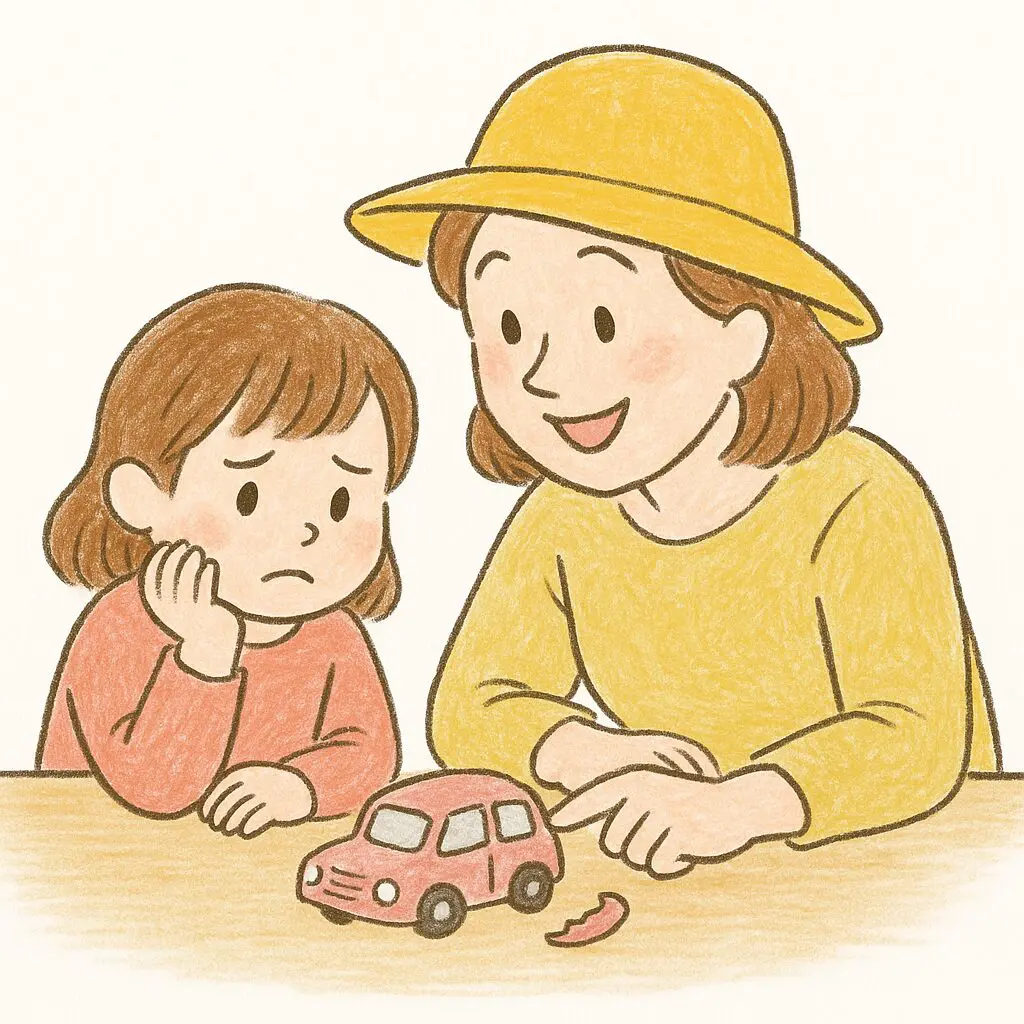
In the "Curious George" series, the relationship between Uncle in the Yellow Hat and George is truly an example of an ideal relationship of trust between adults and children. The yellow hat man does not always scold George for his failures, but respects his curiosity and values learning through his failures. This attitude builds a deep relationship of trust between the two of them.
How to support learning through failure
The yellow hat man will never get angry if George makes a mistake. Rather, I see that failure as an opportunity to learn. We adults too, Attitude of accepting children's failures as a "learning process" is important.
For example, when George breaks something out of curiosity, the man in the yellow hat asks, "How did it happen?" and makes George himself think. This response is effective in instilling a positive perception in children that "failure = experience to use next" rather than "failure = bad thing".
Maki Arimoto, representative lecturer of the Developmental Support School Coper Plus According to the report, "Instead of getting angry at a child's failure, asking, 'What do you think I should do next?' will develop a child's problem-solving ability." It's exactly the response of the man in the yellow hat.
| The response of the man in the yellow hat | Benefits for children |
|---|---|
| Don't scold your failures, think about the causes together | Problem-solving skills develop while maintaining self-esteem |
| Treat them with the same attitude even after failure | A sense of security is created that you are loved even if you fail |
| Think of solutions together | Develop the ability to think for yourself and creativity |
In the picture book "Curious George" series, George's various failure episodes are depicted, but all of them are portrayed positively as a process of growing up. This is a valuable teaching material that conveys the message to children that it is okay to fail.
Attitude to watch over children's growth
Another great thing about Uncle in the Yellow Hat is his attitude of patiently watching George grow. He always trusts George and respects him for thinking and acting on his own.
This is also a very important point in modern parenting. American developmental psychologist Wendy S. Grolnick According to his research, " Parents' attitudes to support children's autonomy enhance their children's intrinsic motivation, self-efficacy, and emotional self-regulation The result is that
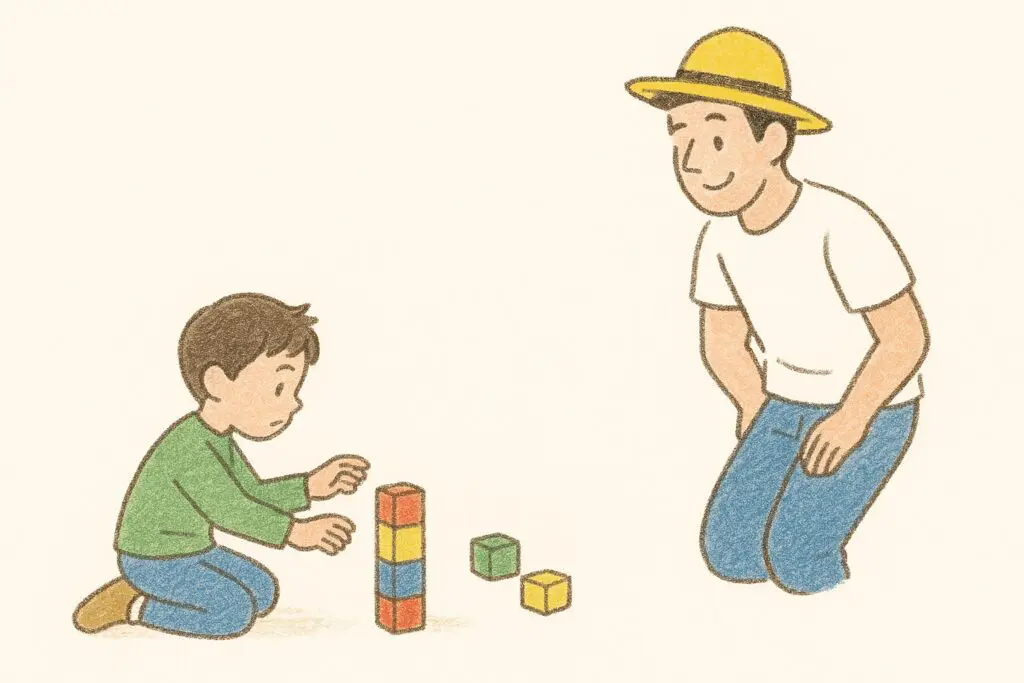
The uncle in the yellow hat doesn't immediately touch George when he tries something new, but watches over him first. And support only when you need it—this "courage to watch" is what fosters a child's independence and confidence.
For example, in the episode "To Find the Stars", I watched George prepare his own luggage and didn't do anything more than necessary. Children have a strong desire to do it themselves. Respecting that feeling fosters a sense of self-esteem.
Here are some tips for practicing the watchful posture of the yellow hat:
- Don't get your hands on what your child is trying right away
- Even if it seems to fail, watch over it as long as there is no safety problem
- Support your child for the first time when they ask for help
- When we succeed, we rejoice together from the bottom of our hearts, and when we fail, we think of solutions together
- Respect the child's pace and don't rush
In the world of picture books, the relationship between Uncle in the Yellow Hat and George is portrayed simply, but it contains deep educational wisdom. Curious children and adults who watch over them warmly. This relationship is the foundation that supports the healthy growth of children.
We would like to follow the example of the uncle in the yellow hat and view the children's small challenges and failures as opportunities for growth in a positive way. By doing so, the relationship of trust between parents and children will become stronger.
Conclusion
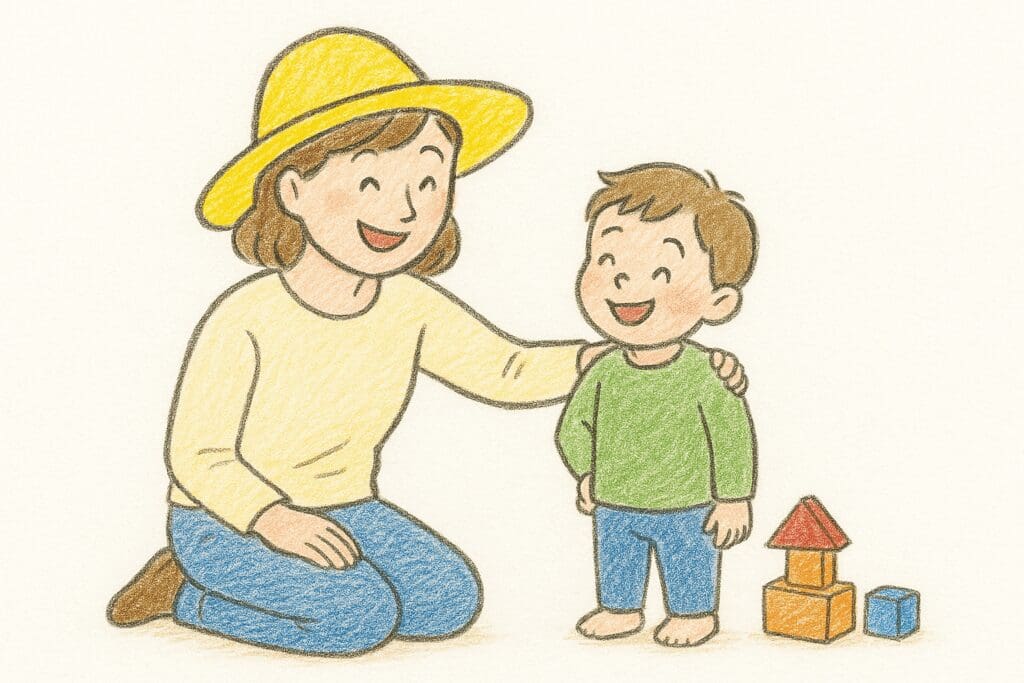
The uncle in the yellow hat in "Curious George" always maintains a warm and watchful attitude towards the curious George. The essence of parenting that can be learned from this relationship lies in the flexibility to not deny children's failures and to see them as opportunities for growth. The attitude of the uncle not reprimanding the happenings caused by George, but helping to solve the problem and turning it into learning, will be a great reference for modern parenting.
By respecting curiosity and continuing dialogue that values the child's intentions, a relationship of trust will naturally be nurtured. Even if there is no secret tool that can solve anything like Doraemon, the secret to fostering independence and creativity is to be close to the child's desire to try it and give them freedom within the right range It may be. The relationship between Uncle in the Yellow Hat and George gently teaches us what ideal parenting looks like.
Frequently Asked Questions (FAQs)
"Is the man in the yellow hat really the ideal image of childcare?" "Is it realistic to raise a child without getting angry?"
In order to answer such questions of moms and dads, we have prepared a FAQ based on the content of this article.
- Does Uncle in the Yellow Hat have a real name?
-
Yes. In the original picture book, it is called "The Man with the Yellow Hat" and the name does not appear, but the name "Ted Shackleford" was first set in the movie released in 2006. However, in Japan anime, he is still known as "uncle".
- Why is the uncle in the yellow hat said to be the ideal image of raising children?
-
He is not angry at George's mischief or failure, but rather respects curiosity and turns it into learning. This figure is highly regarded as the "ideal way to relate" by modern parents who want to develop a sense of self-esteem.
- Is it possible to respond like an uncle in a yellow hat in actual childcare?
-
Even if it is difficult to imitate everything, I feel that even if I incorporate some of them, such as "listening to my feelings first" and "presenting options without denying it", my relationship with my child will change significantly.
- When a child fails, how to lead to learning without scolding?
-
"How did it happen?" "What do you think we should do next?" It is important to think together. Children develop the ability to analyze failures and find clues to solutions.
- How should I change my approach to my child from the response of the man in the yellow hat?
-
Instead of saying "No!", "Why did you do that?" "It might be safer this way," empathy + suggestion-type calls are effective. In the article, we introduce NG responses and alternatives as a set.
- Is MY STELLA's picture book also similar to Uncle Yellow Hat's parenting method?
-
Yes. MY STELLA's picture books are structured to create dialogue by staying close to children's "likes" and "curiosity". There are gimmicks everywhere that can naturally increase self-esteem while fostering a relationship of trust between parents and children.