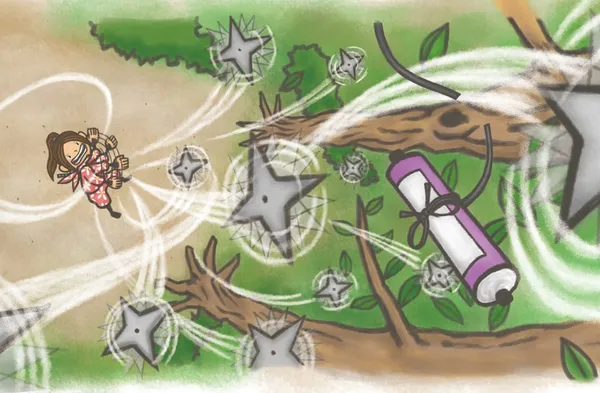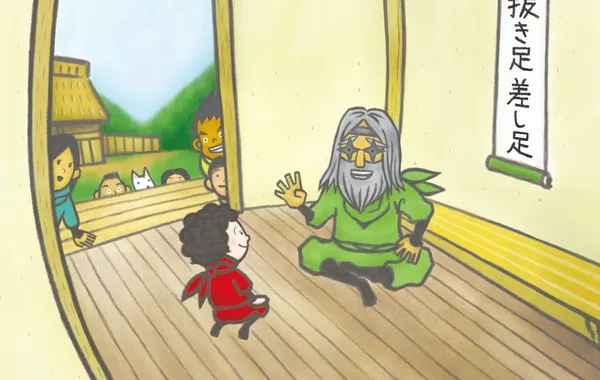
The world of "ninja" that children are obsessed with.
Transformation, stealth techniques, shuriken, etc., the charm is endless. In fact, there was a deep reason why children were attracted to ninjas. In this article, we will unravel why children are obsessed with ninjas and the relationship between their psychological background and developmental stage.
He explained that ninja lovers are not just "because they are cool", but are closely related to the development of children's independence and problem-solving skills, and that they also explain the growth opportunities that can be obtained through "impersonation play".
Parents who are confused by their children's ninja boom will want to support "ninja lovers" after reading this article. Let's explore the charm of ninjas that support children's growth!
The charm of ninjas (1) Because they can transform!
The first reason why children are obsessed with ninjas is the element of "transformation". Normally, he hides from ordinary farmers and townspeople, and only transforms into a ninja during missions... This gap captures the hearts of children and does not let go.
"Ninja = transformation hero theory"! Common elements with squadron and heroes
If you think about it, ninjas can be said to be Japan's ancient "transformation heroes". During the day, he is a normal person, but when necessary, he dresses in special attire and displays superhuman abilities—a common feature of modern squadron heroes, Superman, and more.
The commonalities between ninjas and modern heroes include "transformation", "secret identity", "special abilities", and "sense of mission" 。 Children are realizing their desire to be special through playing ninja.
| Characteristics of ninjas | Commonalities with modern heroes | Impact on children |
|---|---|---|
| Transformation (ninja costume → normal appearance) | Squadron Hero and Superman Transformation | Hope that I can change too |
| Secret identity | The secret identity of the hero | The excitement of having a secret |
| Special Ability (Ninjutsu) | Hero's special abilities | Longing for Possibility |
Why is "impersonation play" important for children's growth?
Even if you can't become a ninja, you can "be" a ninja. This "impersonation play" plays a very important role in children's development.
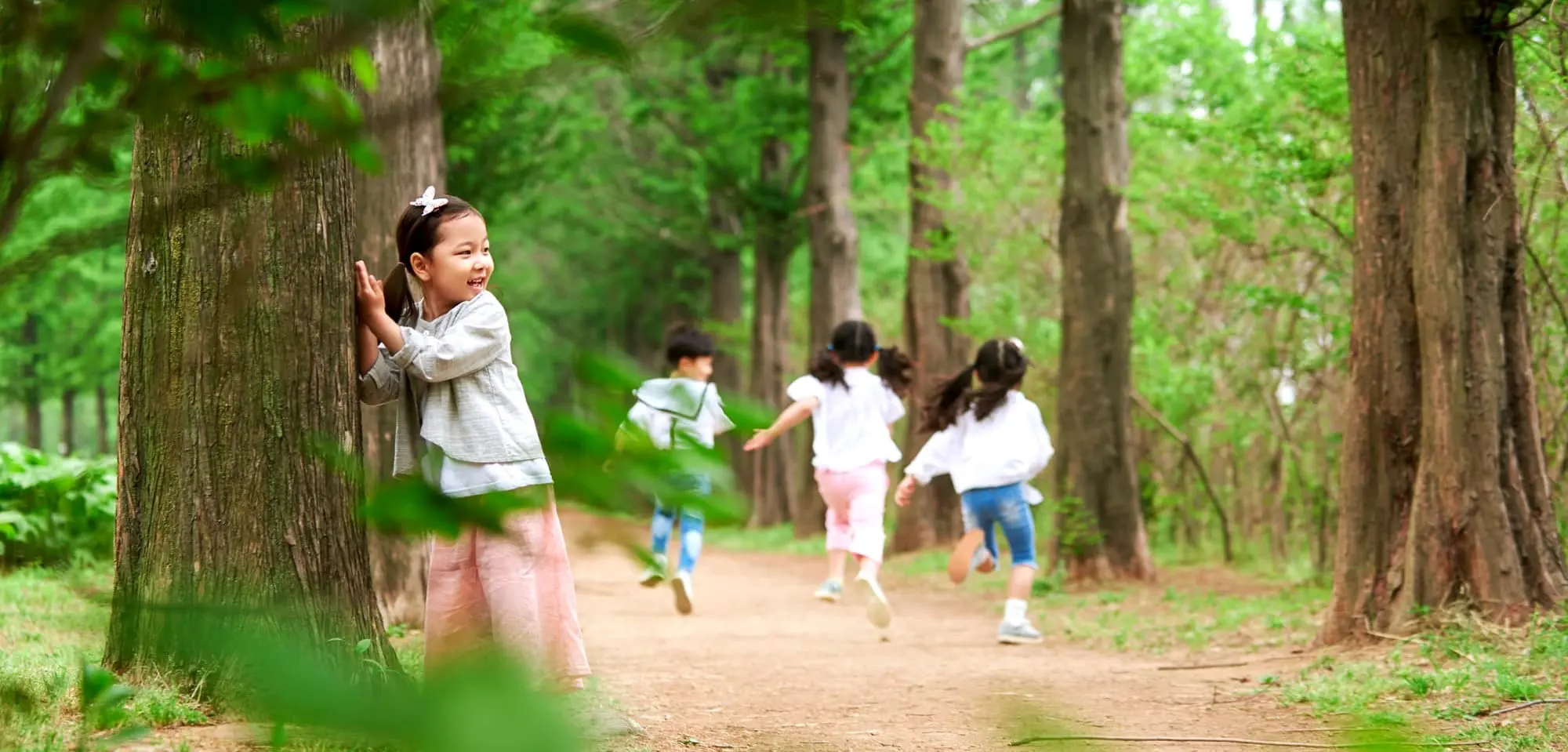
According to developmental psychology research, impersonation play has the following effects:
- Development of imagination and creativity
- Improving social skills and cooperation
- Learning to control emotions
- Developing problem-solving skills
- Improving language skills
Through "impersonation play", children experience perspectives and values that are different from their own, and develop the ability to empathize 。 By becoming a ninja, you can experience "moving quietly", "observing your surroundings carefully", and "overcoming difficulties".
Variations of play that can be played as a ninja
There are various patterns of children's ninja pretend play:
- Make a ninja costume with a washcloth or black clothes
- Make shuriken with origami and practice throwing it
- Practice "sneaking" in the house or in the park
- Team up with your friends as a ninja and plan a secret operation
- Go through obstacles and pretend to be ninja training
This kind of impersonation play is very popular with many children, from toddlers to elementary school students. In particular, shuriken made of origami is a highly educational play that also develops the dexterity of the fingertips.

The charm of ninjas (2) "There are amazing skills!"
When you think of ninjas, everyone probably thinks of "ninjutsu" and "ninja tools". One of the biggest reasons why children are addicted to ninjas is because of the many "amazing skills". Children are strongly attracted to the extraordinary experience of "doing things that cannot be done".
Shuriken, clone techniques, stealth techniques... "Doing the impossible" creates excitement!
One of the biggest reasons why children admire ninjas is He has a "special technique" that can never be done in the real world It means. Throwing shurikens, making copies of oneself with alter ego techniques, disappearing in smoke... These things cannot be experienced in everyday life, which stimulates children's imagination.
According to a survey by the National Museum of History and Folklore, there are more than 80 types of tools that are said to have been used by ninjas. Children are fascinated by the variety of ninja tools and find a story in each of them. As a matter of fact Iga Ninja Museum You can see real ninja tools at the hotel, making it a popular spot for families with children.
| Ninja Techniques and Tools | Points that children find attractive | Real historical background |
|---|---|---|
| Shuriken | The exhilaration of hitting a distant target | In fact, it is mainly a tool to distract the other person's attention |
| The art of alter ego | The wonder of being more than one person | Illusion techniques using straw dolls and dolls |
| Stealth | A special feeling that can disappear | Mimicry technology that blends into the surrounding environment |
| Water spider | The wonder of being able to walk on water | A simple device for moving over the surface of the water |
According to a survey of readers of "MY STELLA", about 70% of children aged 5 to 8 ranked "shuriken throwing" as the number one "ninja technique they want to try". In addition, many children have had the experience of making shuriken with newspaper and origami at home.
Ninja techniques are: It expands the world of children's imagination of "what if I could do this?" It's a great material.
"The movement is cool!" Children are obsessed with dynamic action
The ninja's movements are very dynamic, such as bouncing, flying, spinning, running on walls, etc. Children from early childhood to lower elementary school love to move their bodies, and ninja movements are exactly what they admire.
For example, the following movements are popular with children:
- Ninja Run (bend down and move quickly)
- Wall streamers (use a mat to mimic a wall streamer)
- Ninja balance (walk on a thin line so as not to fall)
- Ninja jump (jump over obstacles)
These movements are It can naturally train children's quickness, balance, flexibility, agility, etc. It is. While having fun in the setting of "ninja training", children actually acquire important motor skills.

Ninjutsu = skill acquisition? Children feel pleasure in "mastering techniques"
For children, the process of "mastering skills" brings a great sense of accomplishment and self-affirmation. Ninja techniques are characterized by gradually becoming "possible" with practice, which perfectly matches children's desire for growth.
Educational psychologist Erickson emphasizes the importance of children in schoolchildren acquiring a sense of competence, and the acquisition of ninja techniques is precisely what satisfies this sense of competence. Acquiring the skills to make origami shuriken and being able to "ninja walking," which requires a sense of balance, will help children gain confidence.
Website National Geographic Published in " Is your kid always ‘in the zone’? That’s likely a mental health boost. According to ", children may experience a sense of immersion called a "flow state" in the process of acquiring new skills, which activates the brain's reward system and leads to further motivation to learn.
The process of learning ninja techniques is structured in a way that is easy to create this "flow state":
- Have a clear goal (e.g., hit the shuriken on the target)
- Get immediate feedback (hit or miss)
- Difficulty can be adjusted (change distance, etc.)
From these characteristics, In the process of learning ninja techniques, children tend to feel a sense of accomplishment, which leads to intrinsic motivation to "want to get better" 。
Is it proof that a child is addicted to ninjas?
Children's strong interest in ninjas has a deep meaning that goes beyond just "I like them because they are cool". From a developmental psychology perspective, we can see that the period when a child becomes obsessed with ninjas coincides with an important stage of growth when independence begins to develop.
The sight of children engrossed in playing ninja may actually be a sign of a major change taking place within them. Let's explore why ninjas have a special meaning in the process of children's growth.
"Ninja = a symbol of independence"! As children grow up, they are happy to be able to do it alone.
Children around the age of 3 to 6 years old have a strong desire to do it themselves. For children at this time, ninjas are seen as beings who "complete their duties alone" and "overcome difficulties on their own".
When a child says, "I want to be a ninja!", behind it is a longing for independence, "I want to accomplish something by myself" 。 According to developmental psychologist Erickson, early childhood is considered a period of "autonomy vs. shame and suspicion", and it is an important time when you begin to feel the joy of accomplishing things on your own.
It is said that children aged 4-5 begin to yearn for "secret actions" and "special abilities", which often leads to interest in ninjas.
In addition, the results show that picture books and children's books about ninjas are effective in fostering children's independence. This is probably why information sites for parents and children such as MY STELLA are gaining popularity for "ninja"-related content tailored to their children's growth.
"Ninjas train" → Being able to work hard and become stronger = teaches you the joy of growing up
In ninja stories, there are always scenes of "training" and "training". The children receive an important message from such a ninja that "if you work hard, you can grow."
Experiencing the process of making an effort and improving little by little is a valuable experience for children to know the joy of growing up 。 It can be said that it is an important learning that will lead to the formation of a "growth mindset" advocated by psychologist Dueck.
In the ninja game, "I was able to jump higher today than yesterday!" and "I became better at hiding than before!" By accumulating small success experiences, children will acquire a sense of self-efficacy that "if you work hard, you can grow."
"Growth mindset" learned from ninja training
It is said that children who experience the process of "training → growth" through role-play such as "playing ninja" are more likely to persist in tackling difficult challenges.
For example, you can practice making origami and throwing shuriken, and practicing to train your sense of balance, you can experience the "joy of improving little by little" through the ninja worldview. This is also thought to have a positive impact on the development of children's "non-cognitive abilities".
For instance Role-play (including ninja play) with fantasy elements contributes to the development of toddlers' "perseverance" (grit) The results have also been reported.
Is it related to your love of ninjas that you like "secret bases" and "hide games"?
There is a deep connection between children's favorite games such as "building a secret base" and "hiding places" and their interest in ninjas. This is because both share elements of "secret" and "hidden".
The fact that children want to have a "secret place" is evidence that they are trying to become mentally independent by securing their own space away from adults It is. Child psychologist Watson said that building a secret base is an important activity that fosters a "sense of self-control" It is pointed out.
Commonalities between secret bases and ninja hideouts
Secret bases and ninja hideouts created by children have the following in common:
| Features | Children's Secret Base | Ninja's Lair | Psychological meaning |
|---|---|---|---|
| hide | Hiding from the eyes of adults | Hide from enemies | Acquire a sense of security and self-protection skills |
| Secrets | Only friends know | A base that only your friends know | Experience a sense of belonging and specialness |
| Our Rules | Own rules at the base | Ninja Code | Balancing autonomy and sociality |
| Own words | Secret watchwords | Ninja Crypto | Identity formation |
According to a survey by the National Organization for the Promotion of Youth Education, people who experience creative play as children tend to have higher problem-solving skills and creativity in adulthood.
The fact that many works on the theme of children's secret bases, such as the picture book "Welcome to the House of Tomorrow" (Kaiseisha), can be said to show the universal appeal and developmental significance of this play.
In addition, museum exhibits for children dealing with the history of traditional ninjas in Japan are also gaining popularity. Iga Ninja Museum We also have a full range of ninja experience programs for children. This kind of experiential learning also provides an opportunity to develop an interest in history and culture through the ninja worldview.
Children's fascination with ninjas is not just a temporary boom, but a sign of their independence and willingness to take on challenges. We adults would like to warmly watch over and support such children's love of ninjas as a happy sign of growth.
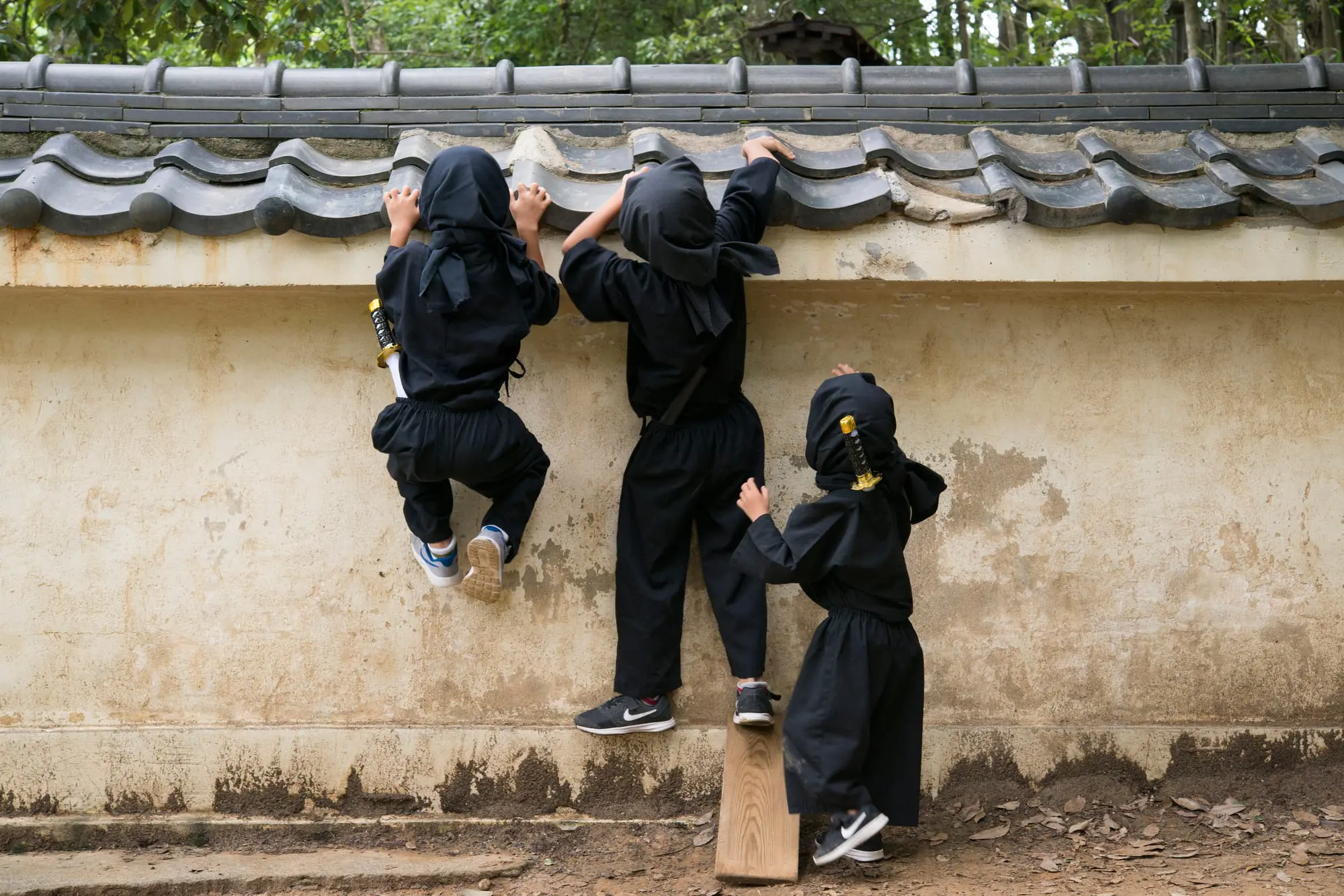
Let's support "ninja lovers" with all our might!
When a child becomes obsessed with a ninja, it is an opportunity for growth that goes beyond just the feeling of "liking". Parents and educators can greatly expand their children's potential by providing support to further deepen and expand this interest.
Respecting children's "likes" and linking them to learning and growth increases children's self-esteem 。 It is important not to take interest in ninjas as "just play" and to look at the learning possibilities that expand from it.
For example, ninja-themed picture books allow you to learn the importance of cooperation and ingenuity while enjoying the world view of ninjas. In addition, visiting historical sites such as the Iga Ninja Museum and the Koka-ryu Ninjutsu Mansion will be an experience that will satisfy both historical learning and adventurous spirit.
"Ninja wisdom" is useful even as an adult!
The various techniques and ways of thinking that ninjas acquired are actually very valuable in living in modern society. The "ninja wisdom" that I was exposed to as a child will be a force that can be used even as an adult.
The qualities that ninjas valued, such as "flexibility", "calm judgment", and "staying power", often overlap with the abilities required of working people 。 When children admire ninjas, the foundation of these qualities is naturally nurtured.
| Ninja Wisdom | Childhood experiences | Scenes where you can come to life as an adult |
|---|---|---|
| Situational observation skills | Look carefully around and look for a place to hide | Analyze the business situation and detect problems early |
| Staying power | Practice of maintaining the same posture for a long time | Continuation of difficult projects, stress resistant |
| Adaptable response | Play to overcome unexpected obstacles | Ability to deal with sudden problems |
| Creativity | Make ninja tools with familiar things | Problem-solving with limited resources |
Guidelines for career education of the Ministry of Education, Culture, Sports, Science and Technology However, the importance of developing "problem response skills" and "self-management skills" from childhood has been pointed out. Playing ninja and being interested in ninjas is a great opportunity to develop these abilities while having fun.
Thus, the charm of ninjas is not limited to children's temporary interests, but also fosters various abilities at each stage of their growth, contributing to the formation of wisdom and values that can be used in adulthood. That's why children's "ninja love" should be respected not just as a temporary boom, but as an important factor in supporting their growth.
Conclusion
The world of ninjas is filled with many charms that nurture children's imagination. By learning about the history of ninjas, we can see that they were not just "cool" beings, but specialists with wisdom, ingenuity, and patience.
Next time, we will delve into the skills and abilities of ninjas and introduce wisdom that can be used in modern parenting!