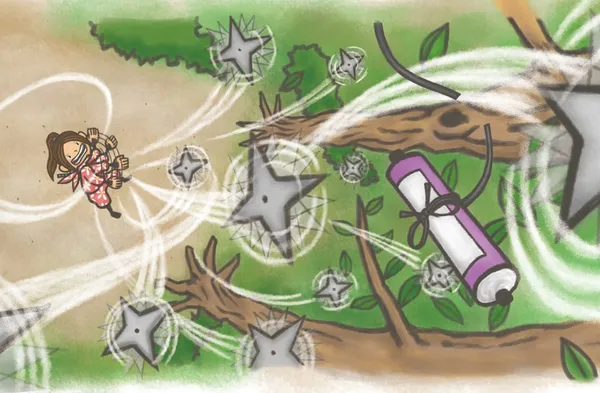
Hello MY STELLA is. With the motto of "deepening the bond between parents and children and fostering children's self-esteem", we run a blog that conveys the importance of reading and education. From this time, we will introduce the wisdom that can be used in parenting and experiences that parents and children can enjoy under the theme of Japan's traditional culture "ninja". Explore the world of ninjas with your child and develop their imagination and self-esteem.
Do you have a child who longs for ninjas?
The world of ninjas nurtured by Japan's history not only stimulates children's imagination, but also == physical ability, concentration, and most importantly, Self-affirmation It will be a great teaching material == to enhanc.
In this series, we will thoroughly explain the charm of ninjas that can be enjoyed while deepening the bond between parents and children, from the history of ninjas to ninja training that children can practice. Iga and Koga In addition to information on authentic ninja experience spots, we will also introduce simple training methods that can be done at home and how to make use of ninja wisdom in modern times.
== The "mind that never gives up" and "the ability to devise" that can be learned from the ninja's way of life will have a great impact on your child's growth and self-esteem. == Why don't you dive into the world of ninja figures based on historical facts and ninja experiences that children will be obsessed with?
Basic knowledge and history of ninjas: Let's learn with children
A ninja that children admire. The image of him dressed in black, throwing shuriken, and flying around the roof may have a strong image. But what were the actual ninjas like? Explore the world of ninjas with your children.
What kind of people are ninjas?
Ninjas are a special group of skills that specialized in espionage and covert operations, mainly active from the Sengoku period to the Edo period. They were called "shinobi," "ninja," and "shinobi," and infiltrated enemy territory to gather information and sometimes carry out strategic operations.
In modern anime and games, it is often portrayed as having superhuman abilities. The actual ninja carried out its mission with thorough training and wisdom 。 Their true strength lies in their concealment skills, disguise skills, and wisdom in using various tools.
== Mie Prefecture Iga Ninja Museum According to the exhibit == , the ninja was not just an assassin, but rather a specialist in information warfare. They had a worldview based on the five elements of wood, fire, earth, metal, and water, called the "art of the five elements," and used these elements to create various techniques.
Points to convey to children : Ninjas were not only physically capable, but also smart and patient, and were "problem-solving professionals" at the time!
The origin and development of ninjas: Let's learn about the history of ninjas in a fun way for parents and children
There are various theories about the origin of ninjas, but many historians believe that their prototype was formed from the end of the Heian period to the Kamakura period. It is said that it began when people living in mountainous areas called "grass people" were hired using their geographical knowledge and survival skills.
In the Muromachi period, ninja groups developed mainly in Iga (around present-day Iga City, Mie Prefecture) and Koka (around present-day Koka City, Shiga Prefecture). The region was isolated from the outside world by a basin surrounded by mountains, and it was an environment that fostered its own culture and technology.
== It is also a fun learning experience to look at the map with your children and think, "Why were there so many ninjas in this area?" ==
In the Sengoku period, daimyo from all over the world began to actively employ ninjas. Many warlords, such as Oda Nobunaga and Tokugawa Ieyasu, used ninjas as intelligence gatherers and agents against hostile forces. In particular, it is known that the Iga ninja served the Tokugawa family and the Koga ninja served the Takeda family.
In the Edo period, as the number of visible wars decreased, many ninjas disappeared or switched to other professions. However, the skills and knowledge were passed down to some families as secrets.
| Era | Ninja situation | Main activities |
|---|---|---|
| Heian ~ Kamakura period | Appears as a "grass person" | Scouting, escorting in mountainous terrain |
| Muromachi period | Developed mainly in Iga and Koka | Information gathering and work activities |
| Sengoku period | Employed by each daimyo | Espionage, infiltration, sabotage |
| Edo period | Decrease in activity, desecration of technology | The role of the shogunate and the secret police of the domain |
Let's talk with parents and children "If there were ninjas in this day and age, what kind of work would they do?" Ask questions that stimulate children's imagination.
The Role of Ninjas in Japan's History - Hidden Actors
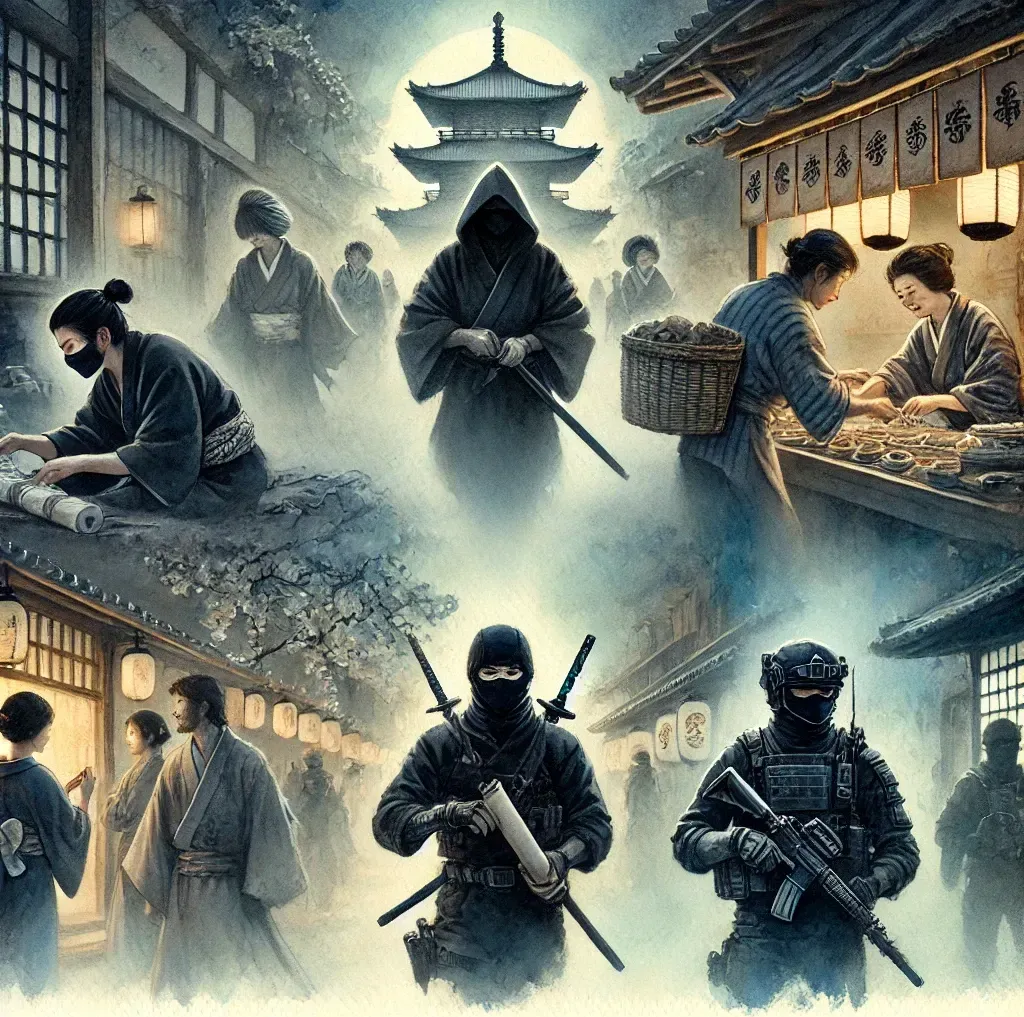
Ninjas were a hidden force in Japan's history, although they rarely took the spotlight, but they had a significant impact at important turning points. Their main roles included:
- Gathering information (surveying enemy movements, troops, terrain, etc.)
- Intelligence activities (infiltrating enemy camp, bringing back information)
- sabotage (strategic sabotage of enemy facilities)
- Guidance and sabotage (dissemination of false information to lead the enemy in the wrong direction)
- Escort (personal protection of the lord and important people)
- Special Missions (various activities to achieve objectives)
For example, there is a theory that during the Honnoji incident, the Iga ninja, who sensed Mitsuhide Akechi's movements, conveyed the urgent news to Tokugawa Ieyasu. There is an anecdote that Ieyasu was able to avoid a crisis because of this.
== Iga City, Mie Prefecture " Iga Ninja Museum According to ==, in the Iga region of the Sengoku period, an autonomous organization called "Iga Sokoku" was formed, and it is said that ninjas functioned as the center of its defense and information network.
Ninjas had not only fighting skills, but also various knowledge such as medicine, meteorology, geography, and psychology. They made comprehensive use of this knowledge in their own system of "ninjutsu". For example, I honed all the wisdom necessary to survive, such as knowledge of medicine, how to read the weather, understanding the terrain, and the art of reading the psychology of others.
Tips for children's learning : Ninjas combined knowledge from various fields to solve problems. Let's teach them that their current school studies are actually connected to their future problem-solving skills.
Famous ninjas and legends - the world of history and creation
Ninjas were originally supposed to hide their appearances and not reveal their names, so there are not many ninjas who leave their names in history with their real names. However, from several records and lore, the existence of particularly prominent ninjas is known.
Hattori Hanzo - Loyal Ninja
One of the most famous ninjas is Hattori Hanzo. He was an Iga ninja who served Tokugawa Ieyasu and is said to have saved Ieyasu from crises many times. Especially after the Honnoji Incident, he is known for protecting Ieyasu from Akechi Mitsuhide's pursuers and successfully escaping dangerously called Iga Crossing.
It is said that Hanzo later held the position of "Gometsuke" in the Edo shogunate and was in charge of the Tokugawa family's ninja organization. The Hanzomon Gate in Tokyo is named after him.
Kirigakure Saizou - Mysterious Ninja
Kirigakure Saizou is a legendary ninja who is said to have had one of the best skills among the Koga ninjas. He is depicted as a ninja with superhuman abilities in various lores and stories, but there are various theories as to whether he actually existed.
It is said that Saizou had mystical abilities such as "being able to become invisible" and "being able to use the art of alter egos", but these are believed to have been added to the creations and exaggerations of later generations.
Let's think about it as a child Let's expand our imagination and imagine: "What was the actual method of 'becoming invisible' that Kirigakure Saizo used?"
Kunoichi - Female ninja activities
One of the most famous female ninjas is Chiyojo Mochizuki. She was born into a family of Koka ninjas and is credited with her exceptional ninjutsu and resourcefulness in numerous missions. There is a legend that he was particularly good at disguise.
Chiyome and other female ninjas were good at infiltrating places that were difficult for men to enter and gathering information. Their success is an important aspect of the diversity of ninja beings.
Legend and reality - the difference between fiction and history
Many legends about ninjas are derived from "ninjutsu books" and "gimmick picture books" written in the Edo period. == Historian Yuji Yamada" Ninja's illusion and reality (2022) == The image of a ninja has been formed under the influence of Edo period plays and ukiyo-e, as well as modern manga and movies, and is said to have many differences from the actual ninja appearance.
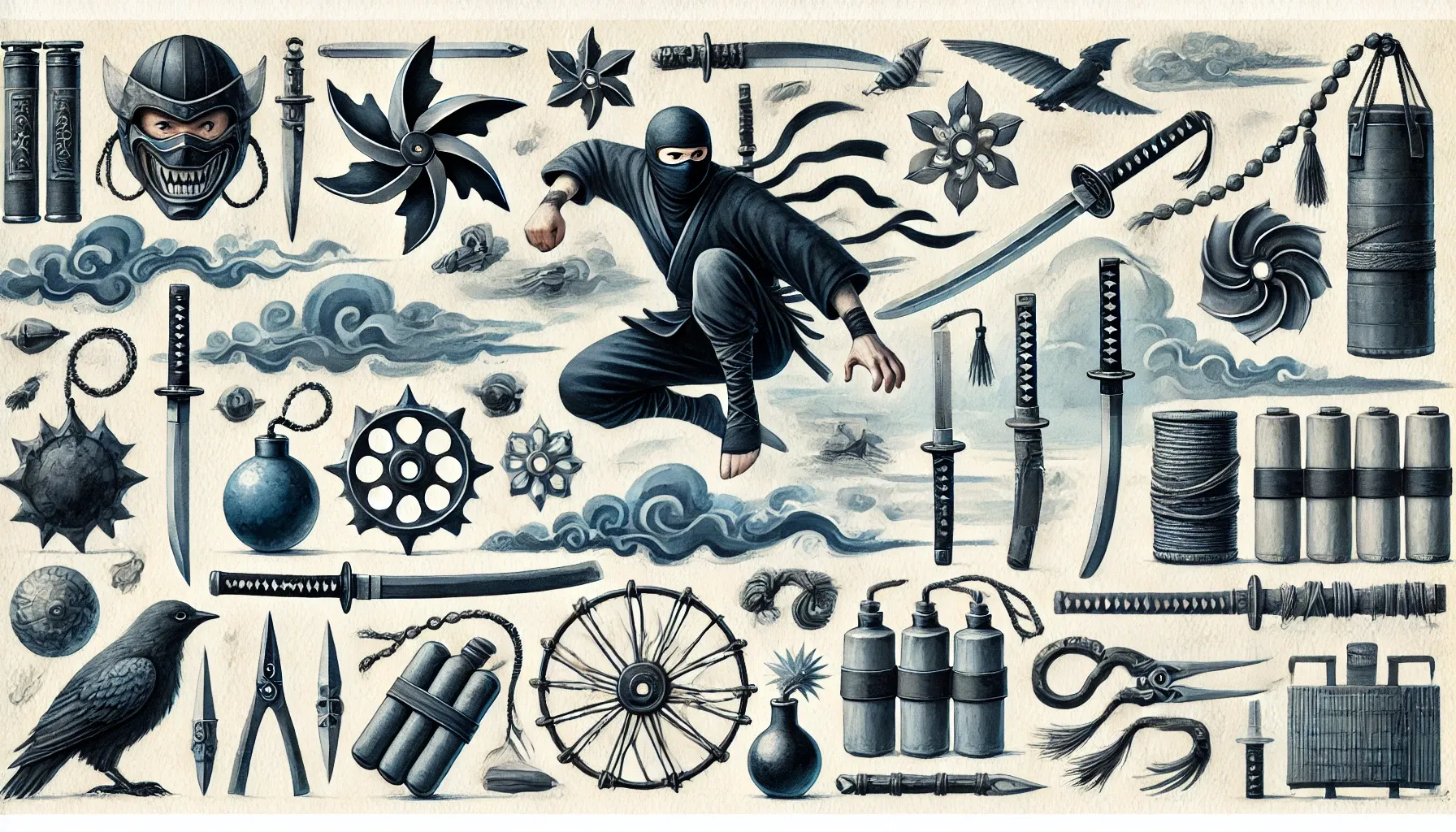
For example, the image of using shuriken as the main weapon is a modern creation, and it seems that actual ninjas often used practical weapons such as daggers and sickles. In addition, the image of black clothing is also said to be greatly influenced by Kabuki and classical performing arts. The basic principle was to disguise themselves as ordinary farmers, merchants, travelers, etc. so as not to stand out.
In this way, there is a big gap between the real image of ninjas and the legend, but that is why it stimulates children's imagination and deepens their interest in history.
Let's discuss it with parents and children "What is the difference between an anime ninja and a real ninja?" "Why was disguise important for ninjas?" Let's enjoy conversations that foster children's critical thinking skills.
Conclusion
This time, we learned about the basic knowledge and history of ninjas. The ninjas were not just warriors, but specialists in information warfare, a special group that used various knowledge and techniques to carry out their missions. Ninja groups that developed mainly in Iga and Koka were heavily used by the feudal lords during the Sengoku period, but gradually disappeared in the Edo period.
From real-life ninjas like Hattori Hanzo to legendary ninjas like Kirigakure Saizou, and the female ninja Kunoichi, the presence of various ninjas stimulates children's imaginations. There is a big gap between the image of a ninja depicted in modern entertainment and the actual ninja, but knowing the historical facts will deepen children's critical thinking skills and interest in history.
Ninjas' "observation skills," "adaptability," and "patience" are important qualities for modern children. Let's have fun learning these values as you explore the world of ninjas with your child.
Next preview
In the next article, titled "Ninja Techniques and Abilities: Wisdom that Can Be Used in Modern Parenting," we will introduce ninja wisdom that can be used in modern parenting, from the basics of ninjutsu to disguise techniques, ninja tools, and how to gather information. Please look forward to!