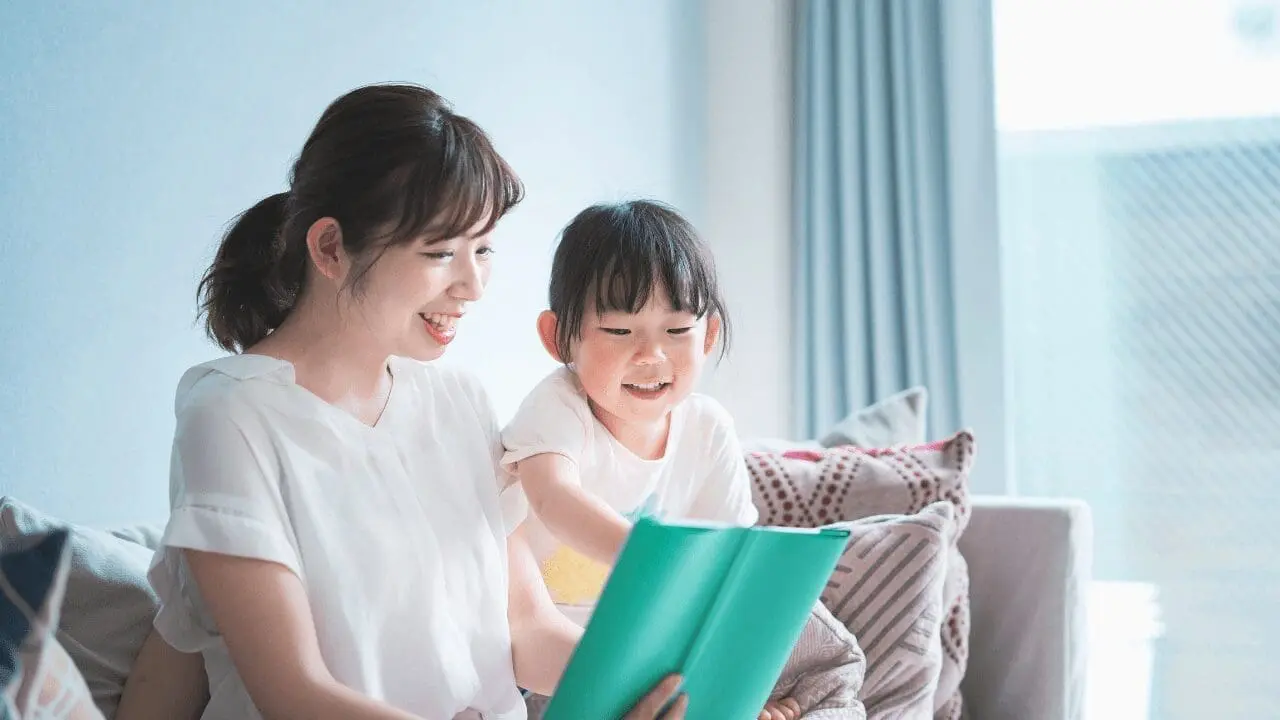
Hello, I'm a MY STELLA staff! Today, we will introduce plenty of points that parents and children can learn about the "effect of picture book reading" in a fun way. In this article, we will explain in an easy-to-understand manner how reading picture books affects children's words, imagination, emotions, communication skills, and concentration. In addition, we will suggest tips for making daily reading more effective and recommended picture books for each age. You can find hints such as "Every day will be richer with your children".
What is picture book reading in the first place?

Hello, I'm a MY STELLA staff! Today, we will introduce plenty of points that parents and children can learn about the "effect of picture book reading" in a fun way. In this article, we will explain in an easy-to-understand manner how reading picture books affects children's words, imagination, emotions, communication skills, and concentration. In addition, we will suggest tips for making daily reading more effective and recommended picture books for each age. You can find hints such as "Every day will be richer with your children".
What is picture book reading?
Picture book reading is a communication activity in which adults read picture books aloud to children and enjoy the world of stories and illustrations together. It is characterized by rich exchanges such as not only reading texts, but also the timing of turning pages, the inflection of voices, and pointing to pictures to speak. It is practiced not only in parent-child time at home, but also in various settings such as libraries, nursery schools, and kindergartens. It is also attractive that everyone from infants to elementary school students can enjoy it according to their age and developmental stage.
In Japan, through activities such as "Ohanashikai" and "Book Start," efforts are being made to spread reading not only at home but also throughout the community. Picture books have a variety of stimuli such as words, rhythm, the beauty of colors, and humor, and are believed to have a positive impact on children's development and parent-child relationships. Reading time is an irreplaceable moment to deepen the relationship of trust between parents and children and open the door to a new world for children.
The 5 main effects of picture book reading
1. Impact on language development
Reading picture books is said to enrich children's vocabulary and expressive skills. Through daily reading, students learn natural Japanese rhythms and phrases from their ears, and cultivate the foundation that leads to reading alone. Especially in infancy, the absorption of words is active, so exposure to a variety of words and sentences improves communication skills, which has a positive impact on later academic ability. By engaging in dialogue between parents and children, they will naturally learn to catch conversations.
2. Cultivation of imagination and creativity
By immersing themselves in the world of picture books, children can freely imagine scenes and characters they have never seen before. The experience of thinking about "what will happen next?" using the flow of the story and pictures as clues becomes the basis for imagination and the ability to create stories. The process of enjoying pictures and stories with your own interpretation fosters the flexibility to view things from multiple angles and the ability to think creatively. The rich sensibility to play freely in the world of images will grow freely.
3. Growth of emotion and empathy
By being exposed to the feelings of the characters and the events of the story, children imagine the feelings of others and overlap them with their own. A variety of emotional experiences, such as joy, surprise, sadness, and anxiety, are directly related to the development of the mind and the growth of empathy. By spending time reading to children together, children can feel secure and deepen their attachment and trust. The joy of sharing emotions slowly develops calm and stable emotions.
4. Effect on concentration and comprehension
The experience of following a story while listening to a picture book from beginning to end will help children improve their concentration. Gradually, you will be able to predict the development of the story and notice changes in detailed pictures, and your understanding and observation skills will be developed. By acquiring a "listening attitude" through a book, the basic physical strength for learning after elementary school naturally grows. The important skills that form the foundation of learning and life will be firmly stored.
5. Improve communication skills
Reading time is a great opportunity for parents and children to enjoy conversations and exchange words and feelings. "Why did this happen?" "How does this child feel?" While asking and answering questions naturally, you will hone your ability to convey your thoughts and listen to what others have to say. This accumulation will also help you build good relationships with your friends and surroundings, and you will greatly develop your social skills and communication skills.
Tips for effective storytelling
Points on how to choose a book
When starting to read picture books, it is important to be aware of your child's age, developmental stage, and interests when choosing books. For 0-2 year olds, it is better to choose short picture books with fun sounds and rhythms, for 3-4 year olds to choose short picture books with repetitive and simple stories, and for 5 and over children, it is better to choose short picture books with a little length and depth in the story. If you are aware of your child's "favorite theme" such as cars, dinosaurs, and animals, your concentration will increase significantly. In addition, classic works that are popular in Japan, such as "Daruma-sanga" (Kagakui Hiroshi, Bronze Shinsha) and "Harapeko Caterpillar" (Eric Carl, Kaiseisha), are loved by many children.
Creating an environment that enhances effectiveness
In order to fully demonstrate the effect of storytelling, it is also important to create an environment. Turn off distractions such as TVs and smartphones and create a quiet and calming space. Choosing a place where both parents and children can relax, such as on their laps or on a soft cushion, will naturally make it easier to concentrate. The lighting is not too bright, and if you are aware of light that is easy on the eyes, it will also improve the comfort of reading. It is also effective to incorporate it at a fixed time in your life, such as before going to bed or taking a nap.
Incorporate conversations and questions
Not only do you read it, but sometimes you can ask, "What do you think of ○○-chan?" and "What do you think will happen next?" By having conversations about stories and pictures, children's thinking and expressive skills will be enriched. It is also a fun time to carefully observe the picture while turning the pages and discuss favorite characters with parents and children. This interaction will further develop your communication skills and imagination. While being close to your child's reactions and emotions, you should also value empathetic words.
The importance of "habituation"
Reading aloud is more powerful not only once but also when it is made into a habit continuously. It doesn't matter if it's 10 minutes every day. If you set a fixed "reading time" in your life, such as before going to bed or after breakfast, your child will be able to look forward to it with peace of mind. By continuing as a habit, the richness of language, concentration, and the relationship of trust between parents and children will naturally deepen. Being aware of the life where books are close to you and accumulating small success experiences is the secret to a fun storytelling life.
Recommended picture books by age and how to enjoy them
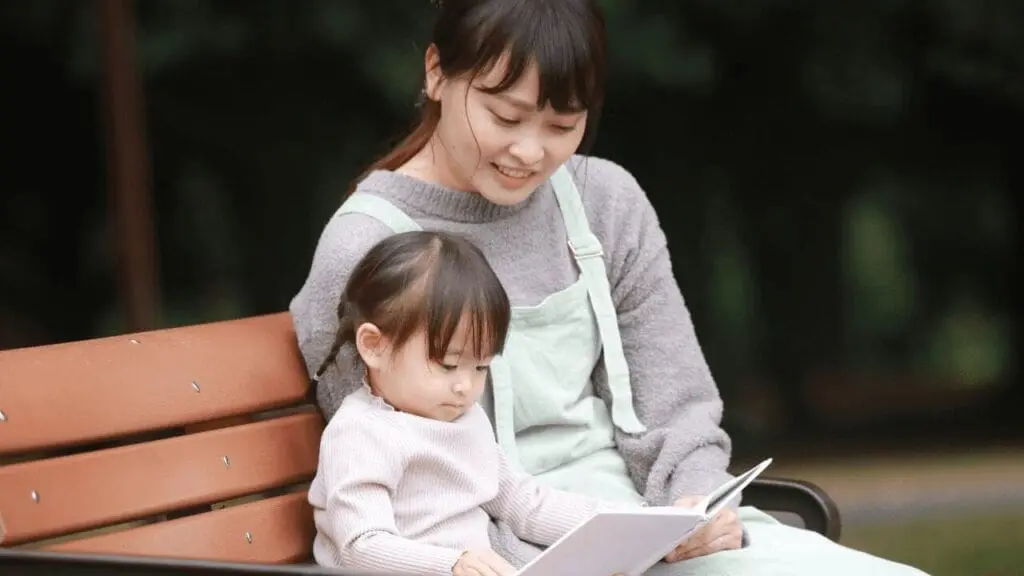
Choosing picture books according to the child's growth stage will further enhance the effectiveness of reading to children. Be aware of the characteristics of development and interests at each age, and devise ways to continue enjoying it at home without difficulty. Here, we will introduce recommended picture books and points on how to enjoy them, divided into four stages: "0-1 years old", "2-3 years old", "4-6 years old", and "elementary school students".
0-1 years old: Enjoy parent-child interaction
0-1 years old is the time when you feel the rhythm and sound resonance even if you don't fully understand the language yet. We recommend thick and easy-to-turn cloth picture books, board books, and works that are fun to repeat, such as "No Mother" (Miyoko Matsutani/Doshinsha). Holding them on your lap, reading with different voices, tracing pictures with your fingers, and reading with eye contact with your baby will deepen the bond between parents and children.
2-3 years old: a time to develop language and curiosity
The fingertips begin to develop, and interest in stories, onomatopoeia, and colors expands in the 2-3 years old. "Daruma-sanga" (Hiroshi Kagakui / Bronze Shinsha) and "Sticky" (Taro Miura / Kogumasha), picture books about animals and vehicles are also popular. Entertain them with fast-paced reading and intonation of voices, and also value the way your child imitates and hums words. Also, the fun of turning pages and pointing to pictures and words to check together are also games unique to this time of year.
4-6 years old: Bring out imagination and emotional expression
At the age of 4-6, they are able to understand the development of the story, and they are more likely to empathize with the main character and have their own ideas. We also recommend a slightly longer story such as "Gurito Gura" (Rieko Nakagawa, Yuriko Omura / Gospel Museum Bookstore) and "Oshire no Boken" (Furutataruhi, Tabatase Ichi/Doshinsha). Ask questions such as "What do you think will happen next?" on each page to help them get into the story. Sharing the "world of the story" with parents and children with facial expressions and gestures will remain even more memorable.
Elementary school students: Supporting intellectual curiosity and independence
When you become an elementary school student, your intellectual interest expands at once while using both reading aloud and "reading alone". We also recommend chapter-based full-length stories and science picture books such as "Elmer's Bubble" (Ruth Styles Gannett / Gospel Museum Shoten) and "Hare Toki Buta" (Shiro Yadama / Iwasaki Shoten). By discussing your impressions and imagining the feelings of the characters after reading, you will also develop logical thinking and communication skills. While cherishing the books you want to read yourself, please try to create "time to talk" with parents through book stories.
Tips for reading across ages
At any age, it is important to be close to your child's desire to read this and have time to read their favorite books repeatedly and exchange questions and impressions. In particular, if you make a set time in the morning or before going to bed as a daily habit, it will naturally have a positive impact on your language and emotional development. Please enjoy the reading time that will be a memory for parents and children at a pace that suits your family.
Conclusion
Reading picture books has a great effect on children's language development, imagination, and emotional growth, and deepens parent-child communication. The secret to continuation is to choose books according to your age and growth, and to naturally incorporate them as daily habits. Through talking and asking questions, richer interactions are created. Recently, personalized picture books that reflect children's names and preferences are also popular. At Mystera, we have a picture book with a name that opens up a special world just for children. Please start a warm picture book time with your parents and children.
[References]