Hello! This is ✨ potate.e.j from MY STELLA
The winter night sky is clear and the constellations shine beautifully. Why not look up at the night sky with your child and enjoy the stories hidden in the twinkling constellations?
This time, we will introduce the myth of Orion, which represents the winter starry sky, and its faithful friends Canis Major and Canis Minor. From how to find constellations, secrets of shining stars such as Sirius and Procyon, and tips for stargazing! The story of the constellations will bring the night sky closer and create a special time.
"Find your own story through the constellations!"
MY STELLA will provide you with an opportunity for parents and children to enjoy the world of stories that unfold with the starry sky
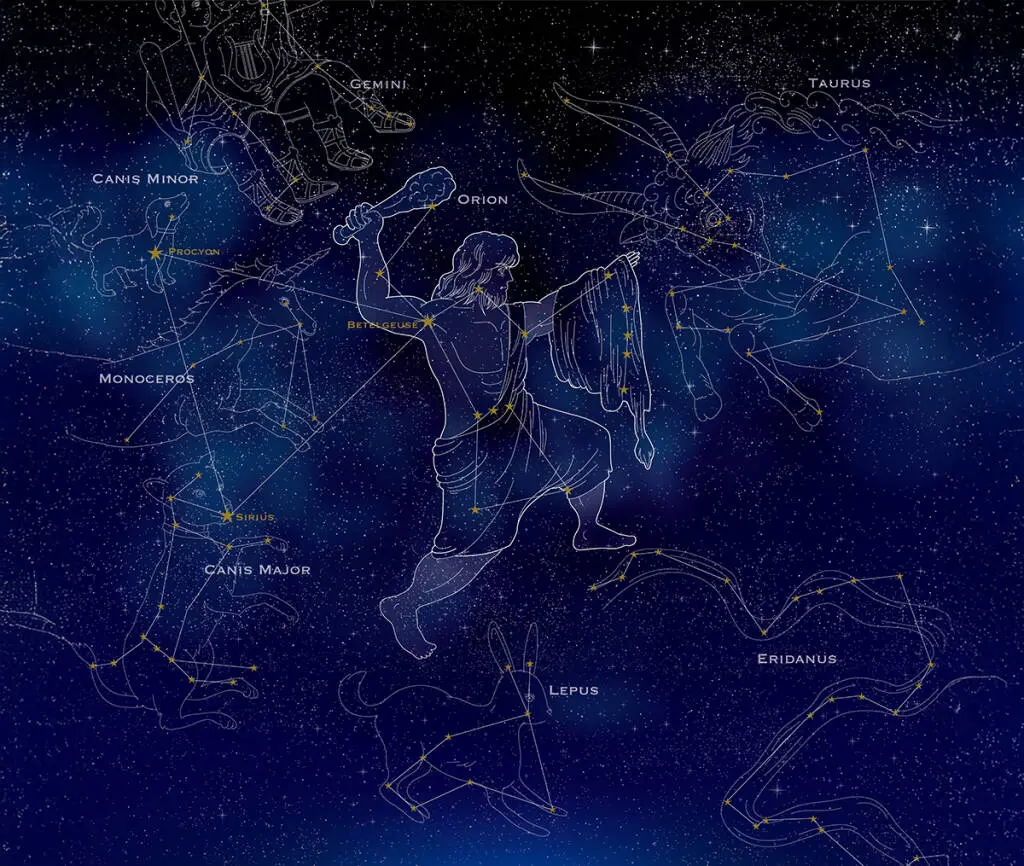
Orion, the representative of the winter constellation, is nestled in Canis Major and Canis Minor, known as loyal friends. In this article, we will explain in detail about Canis Major, which has the brightest first-magnitude star Sirius in the entire sky, and Canis Minor, which is located near it, from how easy it is for anyone to find it, to the myths and legends surrounding the constellations.
Using the constellation Orion as a landmark, we will also introduce practical stargazing tips, such as how to observe with binoculars and observation spots that can be enjoyed in the city. In addition, we will explore the cultural significance of Sirius, who was revered as a star that heralded the new year in ancient Egypt and was popular as the ferry keeper of the Milky Way in Japan. Knowing the stories of the constellations will make stargazing in winter even more fascinating.
1. Orion's loyal friends What are Canis Major and Canis Minor?
Canis Major and Canis Minor, the representative constellations that color the winter night sky, are known as the faithful companions of Orion. These zodiac signs are A constellation representing two hounds hunting with Orion, a hunter in Greek mythology It has stimulated people's imagination since ancient times.
Canis Major and Canis Minor are both designated by the International Astronomical Union as one of the 88 constellations in the sky. These constellations are located on the eastern side of the constellation Orion and form a constellation that is particularly prominent in the winter night sky.
| Constellation name | Scientific name | Abbreviation | Main features |
|---|---|---|---|
| Canis Major | Canis Major | CMa | Including Sirius, the brightest star in the entire sky |
| Canis Minor | Canis Minor | CMi | Small constellations including the first-magnitude star Procyon |
Both constellations are ideal observation targets, especially for beginners in astronomical observation is. Some of the reasons for this include:
- Contains bright stars, making it easy to observe even in urban areas
- You can easily locate Orion as a landmark
- Observable for a long time in the winter night sky
- There are many celestial objects that can be enjoyed with binoculars and small telescopes.
Since ancient times, These zodiac signs have also played a crucial role as navigational signposts 。 Sirius, in particular, became an important landmark for navigators due to its brightness. Indicators of predicting the flooding of the Nile in ancient Egypt It was also used.
In modern astronomy, Canis Major and Canis Minor are important subjects of study. In particular, Sirius, as one of the closest stars to Earth, has made a significant contribution to the study of stellar evolution.
1.1 Basic data of the zodiac sign
| Items | Canis Major | Canis Minor |
|---|---|---|
| Area ranking | 43 bits | 71 bits |
| Main observation periods | December - March | December - March |
| The brightest stars | Sirius (mag 1.46) | Procyon (0.34 mag) |
2. Characteristics of Canis Major and how to find them
Canis Major (scientific name: Canis Major) is one of the most prominent constellations among all 88 zodiac signs. From the Northern Hemisphere, it is known as a representative constellation that colors the winter night sky, including Sirius, the brightest star in the entire sky It is also popular with beginners in astronomical observation.
| Items | Description |
|---|---|
| Location | Right ascension: 6h to 8h, Declination: -11° to -33° |
| Optimal time to observe | December - March |
| Number of major stars | 8 or more stars |
2.1 Sirius, the first magnitude star in Canis Major
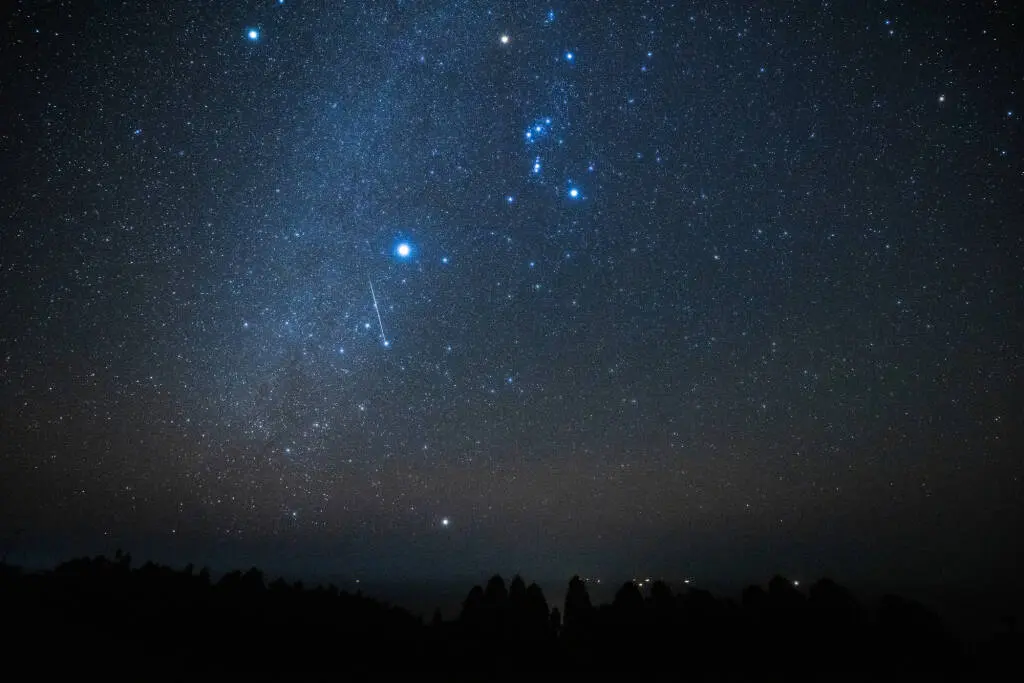
Sirius is a star located at a distance of only 8.6 light-years from Earth and is known as the brightest star in the night sky 。 The apparent magnitude is very bright at -1.46 magnitude, and according to NASA observation data, the surface temperature can reach about 9,940 Kelvin.
Sirius is actually a binary star system, consisting of the main star Sirius A and the white dwarf star Sirius B. It is difficult to see separately with ordinary binoculars, but if you have a telescope with an aperture of 20 cm or more, you can see the two stars if the conditions are good.
2.2 How to find Canis Major in the winter night sky
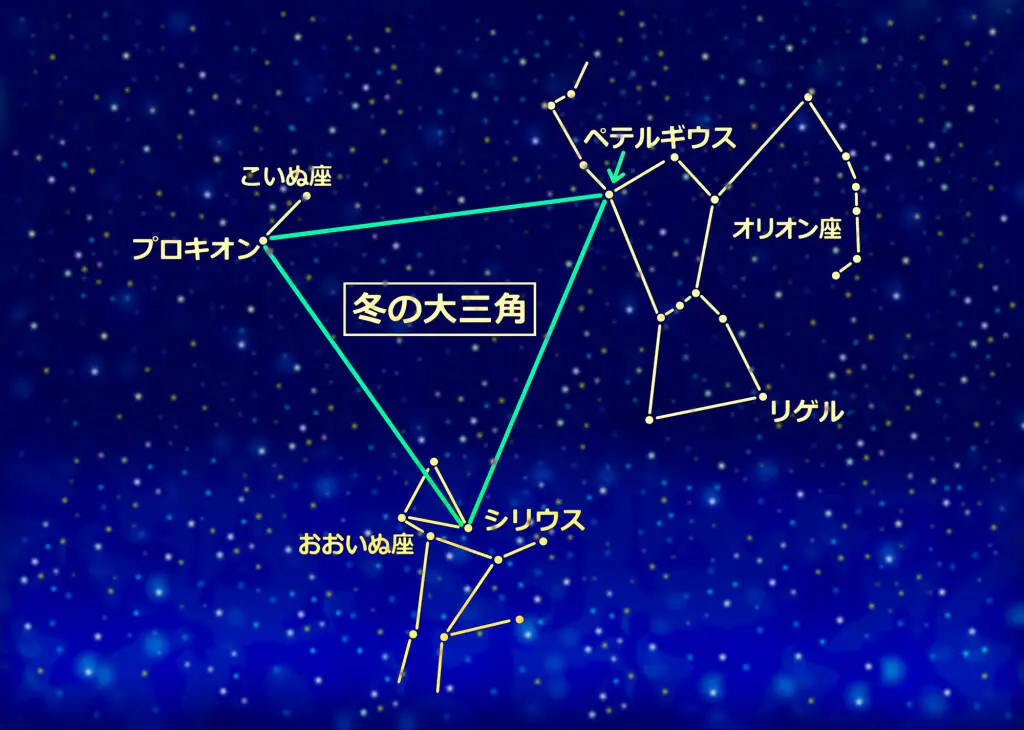
You can find it in the lower left direction of the three stars in the constellation Orion as a landmark 。 Sirius is so bright that it is relatively easy to spot it in the city lights.
The overall shape represents the figure of a large dog, with Sirius falling on the dog's collar or nose position. The main stars that form the constellation represent the dog's torso, paws, and tail.
2.3 When to see Canis Major
Observations from Japan show that Late December and early March are the most suitable for observation. Especially around 9 p.m. in late January, it rises high in the southern sky and is easy to see 。
Observation data from the National Astronomical Observatory of Japan According to the report, it has a brightness that can be observed enough even in urban areas, making it the best target for beginners to start observing constellations.
3. Characteristics of Canis Minor and how to find them
Canis Minor is a small constellation located in the northeast of Canis Major. It is the third smallest constellation of all 88 constellations, with only two major stars. Its shape is simple, resembling a straight line connecting two stars.
3.1 Major stars of Canis Minora
The two main stars that make up the constellation Canis Minor: Procyon, a first-magnitude star, and Gomeisa, a third-magnitude star. Procyon means "one who goes before the dog" and got its name from its location on the east side of Sirius 。
| Star name | Level | Distance (light years) | Features |
|---|---|---|---|
| Procyon | 0.34 magnitude | 11.4 | Eighth closest star from Earth |
| Gomeisa | 2.89 mag | 170 | Yellow giant |
According to NASA observational data, Procyon is a star system relatively close to the solar system, and it is actually a binary star system.
3.2 How to find Canis Minor based on Orion
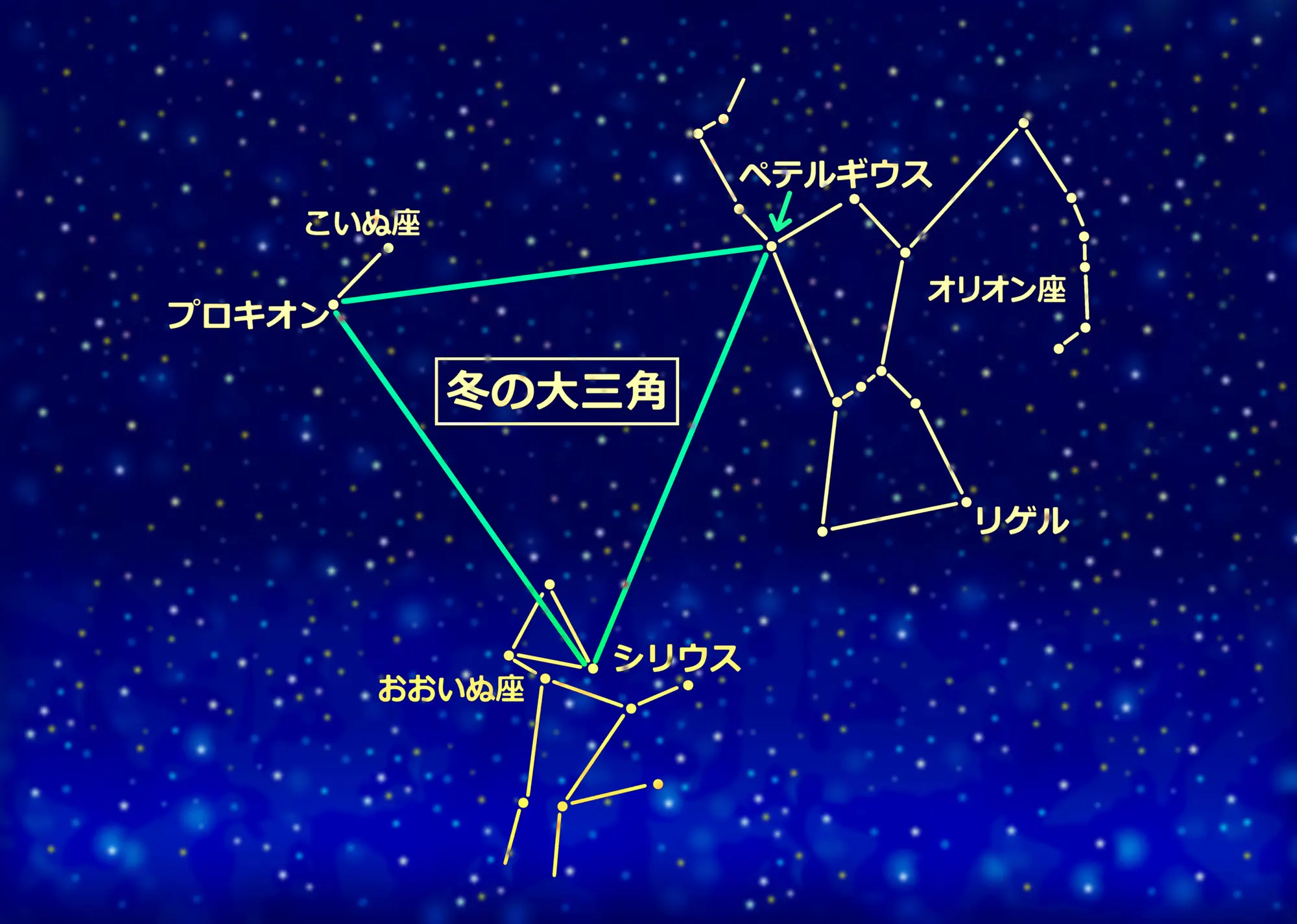
Canis Minor is located on the east side of the line connecting Orion and Canis Major. If you find Sirius from Betelgeuse in Orion and look further east from there, you can find Procyon 。
Procyon, also known as one vertex of the Great Winter Triangle, along with Sirius and Betelgeuse, forms the most prominent array of stars in the winter night sky. By using this triangle as a landmark, even beginners can easily find the seat of the Koi.
National Astronomical Observatory of Japan constellation data According to the report, Canis Minor is best seen around 9 p.m. in late January, when the southern middle altitude reaches about 60 degrees.
In urban observations, the first-magnitude star Procyon, which is less affected by light pollution, is relatively easy to find, while the third-magnitude star Gomeisa may be difficult to find unless the sky conditions are good. Binoculars allow for more reliable observation.
4. The story of Orion and the two dogs in Greek mythology
In Greek mythology, Canis Major and Canis Minor are depicted as the loyal hounds of Orion the hunter. Canis Major contains Sirius, the brightest star, which represents the large hound known as Orion's hunting companion 。
4.1 Orion the Hunter and the Loyal Hounds
Orion is known as the best hunter in Greek mythology. He was believed to be the son of Poseidon, the god of the sea, and had a giant-like physique and exceptional hunting skills. It is said that he always had two loyal hounds with him when hunting, which became the constellations Canis Major and Canis Minor 。
Regarding the relationship with Artemis, according to NHK's commentary, Tragic love with the moon goddess Artemis The story is also told.
4.2 The world of mythology surrounding Sirius
Sirius had the meaning of "scorching star" and had a significant meaning in ancient Greece. The appearance of Sirius heralded the arrival of extreme heat and was also used as an indicator of the time of voyage 。
| Era | Meaning of Sirius |
|---|---|
| Ancient Greece | Harbingers of the scorching season |
| Age of Sautation | Navigation indicator stars |
| Modern | Typical first-magnitude stars in winter |
4.3 Why it became a constellation and legend
When Orion ascended to heaven, his faithful hounds are said to have ascended to heaven as constellations together.
In legend, Sirius, the main star of Canis Major, represents the most loyal hound in pursuit of Orion, and Canis Minor is positioned as its disciple or puppy 。 Both constellations are always located on the east side of Orion, and they are arranged as if they are chasing their master.
These zodiac signs also have another anecdote related to hunting. Some interpret Orion and his hounds as they continue to chase their prey in the sky across the Milky Way, and the story of this eternal hunt is passed down in conjunction with the changing seasons 。
5. Interpretation of Canis Major and Canis Minor in Different Cultures of the World
5.1 Meaning in ancient Egypt
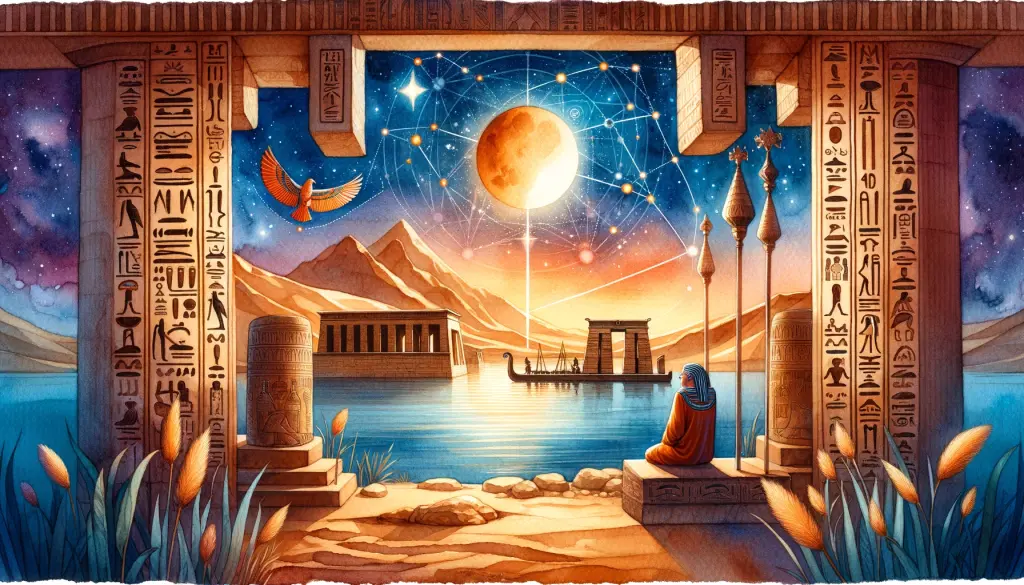
In ancient Egypt, Sirius, the first-magnitude star in Canis Major, had a special meaning. The appearance of Sirius was recognized as an important celestial phenomenon that foreshadowed the flooding of the Nile and was called "Sotis" 。
The Egyptian calendar determines the year based on the appearance of Sirius, and there is a record of it in the ancient Egyptian astronomical calendar stored in the British Museum.
| How to call it in Egypt | Meaning | Related gods |
|---|---|---|
| Sotis | Guardian of the Nile | God Isis |
| Star of Anubis | Guide of the Dead | The god Anubis |
5.2 Traditional Interpretations in Japan
In the traditional Japan interpretation of the zodiac, Canis Major and Canis Minor had different meanings. In astronomical texts of the Edo period, such as "Astronomical Illustrations", the realm of Canis Major was called the "Old Man Star" and was regarded as a symbol of longevity 。
According to ancient astronomical data left in the digital archive of the National Diet Library, Sirius was especially called the "blue star" in Japan and was regarded as a landmark for navigation.
In addition, in the Japan folk calendar, the time when Canis Major and Canis Minor are visible is called the season of "cold dogs" and is used as a landmark for the severe cold season. This is said to be an interpretation influenced by China.
| Era | Designation in Japan | Meaningfulness |
|---|---|---|
| Nara period | Qingda Star | Navigation Landmarks |
| Heian period | Inuhoshi | Symbol of cold |
| Edo period | Elder Star | Symbol of longevity |
In modern times, Canis Major and Canis Minor are popular as standard constellations for observing constellations in winter. Especially in the field of astronomy education, it is widely taught how to find both constellations based on the constellation Orion 。
6. Points of Astronomical Observation
When observing Canis Major and Canis Minor, it is important to choose the right equipment and observation method. Here are some specific observation techniques that can be practiced by beginners to intermediate users.
6.1 How to observe with binoculars
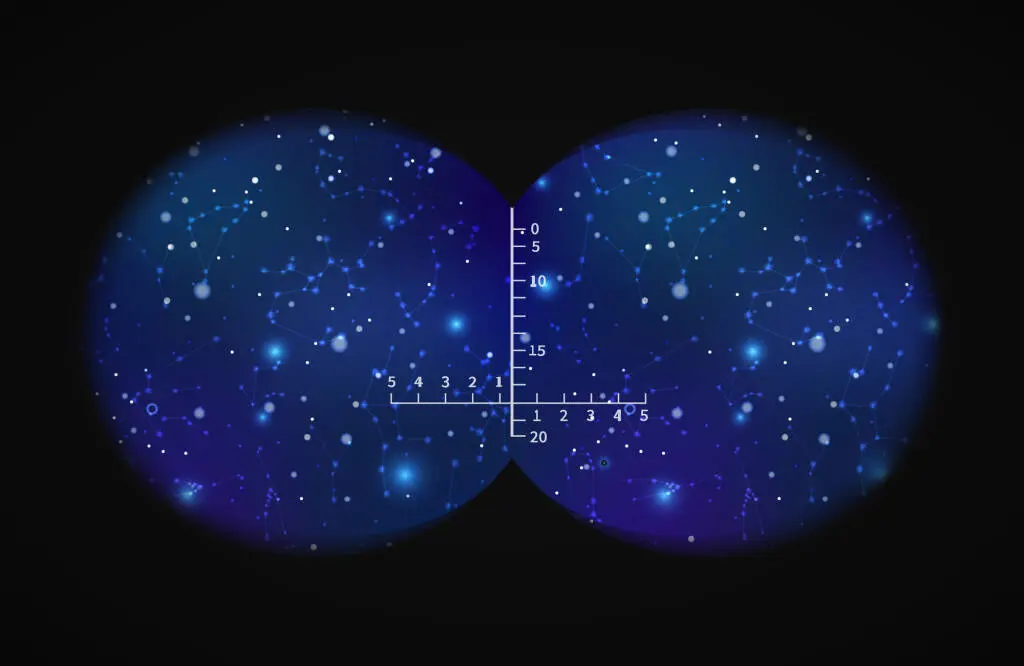
Binoculars are the best introduction to astronomical observation. We recommend a magnification such as 7×50 or 10×50, so you can enjoy the entire constellation with a wide field of view while reducing camera shake 。
| Types of binoculars | Features | Observation target |
|---|---|---|
| 7×50 | Wide field of view and less camera shake | The whole constellation, the color of Sirius |
| 10×50 | Somewhat detailed observation is possible | Sirius B, star cluster |
| 12×50 | High magnification, but tripod recommended | Double stars, nebulae |
6.2 Observation spots that are easy to find even in the city
Even in urban areas that are prone to light pollution, Sirius is very bright and can be observed. For better observation conditions, parks with few high-rise buildings, riverbeds, and observation decks are suitable 。
Star Watching Network In this article, we introduce places suitable for observation in various places.
6.3 Photography Tips
To take constellation photos, you must set an ISO sensitivity of 1600 or higher and a shutter speed of 15 seconds or higher. By using a wide-angle lens, you can capture Canis Major and Canis Minor along with Orion in one photo 。
| Shooting Settings | Recommended values | Remarks |
|---|---|---|
| ISO Sensitivity | 1600-3200 | Depending on the performance of the camera |
| Shutter speed | 15-30 seconds | Adjust by focal length |
| Aperture | F2.8-4.0 | By the brightness of the lens |
On my first shoot, NAOJ Calendar Calculator It is recommended to check the phases of the moon and the position of celestial bodies.
7. Conclusion
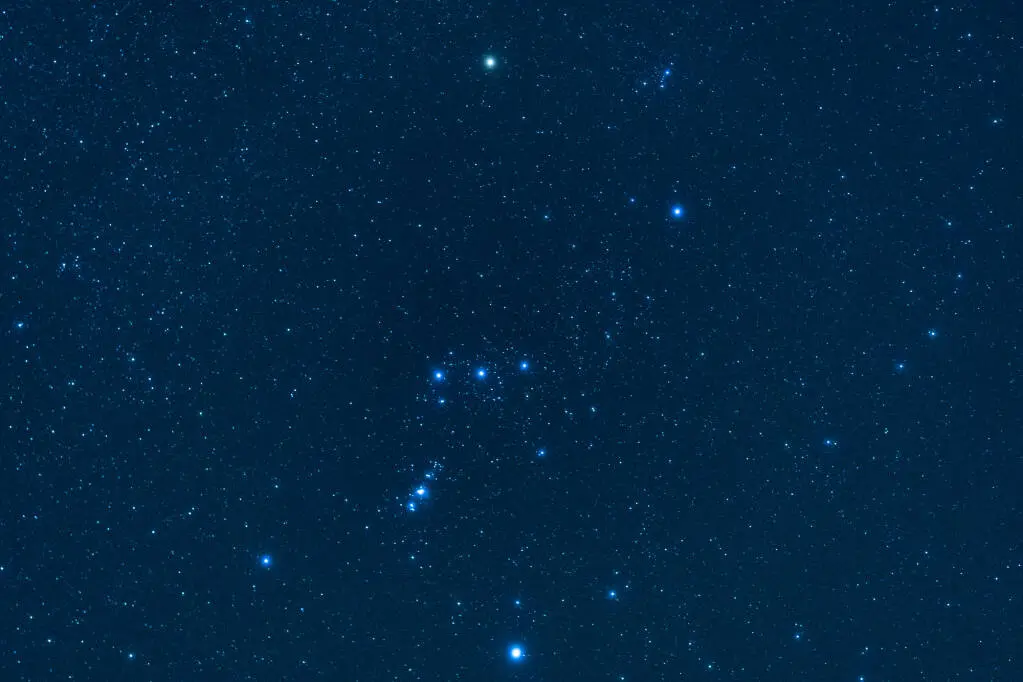
Canis Major and Canis Minor, shining near the constellation Orion, are marks carved in the starry sky as loyal friends of Orion the hunter. Sirius, the first-magnitude star in the constellation Canis Major, is known as the brightest star in the entire sky and has become a landmark in the winter starry sky. These two constellations were considered important stars in ancient Egypt that heralded the flooding of the Nile River, and in Japan, they were popular as the heavenly guard dogs that watched over Orihime and Hikoboshi across the Milky Way. Even without binoculars or an astronomical telescope, Betelgeuse in Orion can be easily spotted as a landmark, and it can be observed even in urban light pollution. In the clear winter night sky, Canis Major, which spreads around Sirius, and Canis Minor, located to its northeast, have stimulated people's imagination since ancient times and created various stories. Be sure to look for Orion and his loyal friends in stargazing tonight.
#オリオン座#おおいぬ座#こいぬ座#冬の星空#星座観察#ギリシャ神話#天体観測#シリウス#星空物語#古代エジプト
References
National Astronomical Observatory of Japan : Provides basic information on constellations and astronomical observations, as well as data on observation periods. In particular, there is detailed information about the constellation Orion and the starry sky in winter.
NASA – Sirius: The Brightest Star : Contains detailed scientific data about Sirius and useful information for observations.
British Museum – Ancient Egyptian Astronomy: Archival material on astronomy in ancient Egypt. The role of Sirius (Sotis) is also described.
NHK for School – : A resource for children to explain the mythology of constellations and astronomy in an easy-to-understand manner.
Astronomical Yearbook 2025 Publisher: Jiren Shokan : A yearbook that covers the best time for stargazing and celestial phenomena in Japan. Observation information of Orion, Canis Major, and Canis Minor is also included.