At first
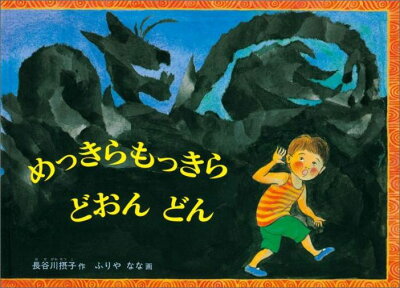
Welcome to the mysterious world of picture books where exciting words are full of exciting words! Setsuko Hasegawa (work) and Nana Shiya (picture) "Plating Mokkira Doondon" is a work full of imagination and humor that captures the hearts of children and does not let go. This picture book was first published in the August 1985 issue of "Children's Books", and became a book from Gospel Museum Bookstore on March 15, 1990.
When I first picked up this picture book, I was a little confused because I had heard rumors that it was "scary". "Maybe my 9-year-old son and 4-year-old daughter will be scared?" I was worried. Especially when I saw the monsters on the cover, I was a little anxious. But when I started reading, oh my! Not only the children, but I myself was completely drawn into the story. When I say "plating and kikirado ondon", I feel like I've returned to my childhood, and I feel fluffy. Would you like to get caught up in the magic of this picture book?
 Po Chip
What kind of children is it recommended for?
Target age and children's reactions
This picture book is recommended for children from 3 years old to the lower grades of elementary school. But even a 2-year-old child can enjoy the rhythm of words. My son is 9 years old and my daughter is 4 years old, and we are both hooked. My daughter loves rhythmic wordplay, and my son is addicted to the fun of the story.
Consideration for children who feel "scared?"
Some people say, "I'm scared," but my children weren't scared at all, although it was a little creepy. Rather, the "a little scary" feeling seems to tickle the children's adventurous spirit, and they beg to read it over and over again. I realize that children are strange things, and they also have curiosity about things that are a little scary.
Charm that adults can enjoy together
Actually, I enjoy it too. A story that tickles your imagination and the sound of words that make you want to hum it. When I read with my children, I also enjoy returning to my children's hearts. Because it's a lot of fun to play the voices of the monsters!
Synopsis
The magic word and the beginning of the story
The main character, Kanta-kun, can't find a friend one day, so he sings a strange song in front of a big tree in the palace.
"Chimpuku Manpuku Apperako Kinpirako Jongara Pikotako Plating Mokkira Doondon"
This word "plating mokkira dondon" works like a magic spell and opens the door to the story. A voice can be heard through the gap in the tree, and when Kanta enters it, he falls through the hole and reaches the mountain at night.
Character introduction of the three monsters
Monmon Byakko
A white monster like a fox and a master of jumping rope.
It's a mess
A red-haired monster that flies in the sky like a flying momonga.
Otakara Manchin
A white-bearded monster with a lot of treasures.
Kanta's Adventure and Return
Kanta gets along well with the monsters and forgets about the passage of time and plays, but suddenly realizes that it is night. Next to the three asleep, Kanta suddenly felt lonely and shouted, "Okay, oh dear"...
About the last "Can you make it work?"
At the end of the story, there is a sentence that says, "Can you make a fuss?" In fact, this was not in the first edition, but was added by the author, Mr. Hasegawa, later.
Every time I read this, I think, children are really like this. I complain that no one is playing with me today, but when I make new friends right away, I get hooked, but in the end, I miss my mother. As a mother, I am always thrilled by the real movement of my child's heart.
What this picture book wants to convey
The author's message "Let's play, everyone!"
I think what this picture book wants to convey is, in the words of the author, Setsuko Hasegawa, "Let's play, everyone!"
Did you know that this picture book was actually born from a song? Mr. Hasegawa made a song called "Plating Mokkira Doondon" before the picture book, and told the children, "Sing freely" and "I hope that many children will sing various 'Plating Mokkira Doondon' cheerfully."
Perspective and creative intention as a childcare worker
Hasegawa is a mother and a nursery teacher, and while working with children, she came to think that she wanted to make picture books for children to play. It is a picture book that teaches children the liberation of their minds, the recognition of differences, and the importance of "play".
Values that can be read from picture books
- Embrace loneliness
- Cherish imagination
- Acknowledge and respect differences
- Fostering free thinking
- Knowing the richness of the mind
When I look at children, I sometimes feel that they are growing through this picture book. In particular, it seems that the mind is growing to "not be afraid of being different". Even monsters who look scary naturally accept that they are actually kind and pure.
Reading methods and tips
Setsuko Hasegawa's Philosophy of Storytelling
Reading aloud is a wonderful way to develop children's imagination and deepen their interest in words. Setsuko Hasegawa also said this about storytelling:
"The trick to reading picture books is to get into the story yourself. It's not about reading print for children, but about adults enjoying the story themselves and entering the world of the story."
My storytelling experience
When I read to my children, I enjoy it to the fullest!
Useful storytelling techniques in practice
- Become a character
- Be aware of sound effects
- Read slowly
- See your child's reaction
- Talk to them
When I read it to my 9-year-old son and 4-year-old daughter, my daughter said "Kya!" to her scary voice, but said, "One more time!" That's what I'm begging. At first, my son was embarrassed, saying, "I'm already big...", but before I knew it, he was asking, "Monmon Byako's voice, make it more scary!" Watching children's reactions is one of the pleasures of reading aloud.
The mystery of the last sentence
When was "Can you make a fuss?" added?
I think the last sentence, "Can you make me happy?" hides a deep message. This sentence was not in the first edition but was added later. According to Gospel Museum Bookstore, "I don't add anything other than the author's intention," so I guess Mr. Hasegawa added it.
The author's thoughts and questions to readers
Mr. Hasegawa passed away in 2011, so why he added this sentence is an eternal mystery... I think I wanted to create a dialogue with readers. I feel like it contains a wish, "Don't forget the words 'plating and plating do ondon'".
Children's reactions and parents' awareness
When I read this sentence, my 9-year-old son said, "I remember! I say it proudly, and my 4-year-old daughter begs me, "Tell me~". I think it's wonderful that this one word can lead to conversations between children.
Highlights of picture books
A door picture with a nostalgic summer scenery
Every time I look at the door picture, my childhood comes back to me. A boy in shorts walking on a road surrounded by rice fields. The shadow is falling directly below, so it must be around noon in midsummer.
Looking at this painting reminds me of my childhood summer vacation. I didn't make an appointment with my friends, but when I went outside, there was no one there, and I felt a little lonely, but I felt like the adventure was about to begin. This picture book has a particularly strong sense of the "summer" season, and I think that is one of the charms.
Children also pester this picture book especially in the summer. "Mom, read the plating clearly!" For them, this story may be a memory of summer.
The power of words that make you want to hum
"Chimpuku Manpuku Apperako Kinpirako Jongara Pikotako Plating Mokkira Doondon"
I don't have to think about the meaning of these lyrics. It's like a mysterious magic that makes you happy just by saying it out loud. From the first time I read it, I couldn't help but hum it.
My daughter especially loves this phrase, she sings it in the bath or chants it during walks. My son was shy at first, but now he starts humming with his sister. Children are sensitive to the sound of words and can genuinely enjoy them. When I become an adult, I can't do it easily, but when I speak out with my children, my heart beats up.
The charm of illustrations
Nana Fall's paintings are really wonderful. The delicacy reminiscent of Japan paintings and the expressive power that captures the hearts of children are exquisite. In particular, the illustrations of the three yokai "Monmon Byako", "Shikka Mokkaka", and "Otakara Manchin" are designed to be friendly even though they look scary at first glance, and the more you look at them, the more you become attached to them.
The children were gradually fascinated by the drawings of the monsters, which they were afraid of at first. When my daughter asked, "How do you draw Monmon Byako?", it was fun to draw together. I feel that the power of illustration is really amazing.
A story that brings Japan's culture to life
The charm of this picture book is that even though it is a fantasy, Japan culture is deeply rooted. Wouldn't the setting of going to another world from the sacred tree of the shrine reminds me of the old-fashioned "hidden secret"? I am impressed that the belief of the eight million Japanese people in God naturally creates such a story.
What happens if you keep reading aloud?
If you read "Plating Mokkira Doondon" repeatedly, your child's sensitivity and imagination will grow steadily.
As they read it over and over again, children will understand the details of the story and empathize with the feelings of the characters. Just like "mental muscle training", the ability to understand emotions becomes stronger. In addition, those unique wordplay and rhythmic sentences enrich your sense of words.
Effects of reading aloud
- Increased imagination
- Increased vocabulary
- Sensitivity becomes richer
- Deepen the bond between parents and children
- Acquire concentration
Every time I read to children, I make new discoveries. My 9-year-old son and 4-year-old daughter fell in love with wordplay because of this picture book. My daughter made her own spell by playing with "Plating Mokkirado Ondon", and my son started telling his sister the story he came up with. The bond between brother and sister may have deepened thanks to this picture book.
Also, this picture book also has questions for parents. In the last scene, Kanta seems to be boring even though he is surrounded by many toys. I am reminded once again that what children really want is not "things" but "relationships". As a mother, I also realize that the time spent reading picture books and playing together is more important than buying a lot of things for my children.
Various ways to enjoy
Songs and sheet music
Did you know that "Plating Mokkira Doondon" has a song and a sheet music? Before making a picture book, Setsuko Hasegawa had made a song with this mysterious word. The lyrics "Chimpuku Manpuku Apperako Kinpirako Jongara Pikotako Plating Mokkira Dondon" have a simple melody that children are familiar with.
It seems that the sheet music of this song is also included in the picture book published by the Gospel Museum Bookstore. I can't play the piano, so I search for "plating mokkira do ondon song" on YouTube and enjoy singing with my children. The melody was more memorable than I expected, and the children quickly remembered it.
Nowadays, there is also a CD of "Plating Mokkira Doondon". The nursery school teacher told me, "It's very popular with children~". It's wonderful to be able to enjoy the story more deeply through music.
Popularity in nursery schools and kindergartens
"Plating Mokkirado Ondon" is very popular in nursery schools and kindergartens. At the nursery school my daughter attends, I heard that she once played "Plating Mokkira Doondon" in a Tanabata play. I can't help but imagine the children who have become "Monmon Byako", "Shikka Mokkaka", and "Otakara Manchin", and I can't help but be cute.
I heard from a nursery teacher that this picture book is perfect for stimulating children's creativity. Enjoy the rhythm of words, imitate monsters, cast that mysterious spell... It's full of gimmicks that make children want to move their bodies naturally.
After reading at the kindergarten, they sometimes play a game called "Atsukarakan". This is a game played by the monsters in "Plating Mokkira Doondon", and the children are very happy. The world of play that expands from picture books is wonderful, isn't it?
Large picture books and videos
"Plating Mokkira Doondon" is also published as a large picture book. I once borrowed it from the library, and it was much larger than a normal picture book, so I could see the details of the picture well, and the children flocked to look at it. In particular, the expressions of the monsters look bigger, which makes it more realistic.
Large picture books are also used for reading to nursery schools, kindergartens, and elementary schools. It is perfect for reading to a large number of children at once.
Then, I found a video of "Plating Mokkira Doondon" on YouTube. There are various videos, from videos read to you by a professional narrator and things that are moved in an anime style. My son and daughter like to read to me, but sometimes it seems refreshing to listen to a different person's voice, and I was very happy.
Plays and costumes
"Plating Mokkirado Ondon" is also popular as a play. It is often performed at elementary school performances and at nursery schools and kindergarten play parties. Even at my son's elementary school, he played in a class play when he was in the second grade, and he proudly told me, "I played a role that was a lot of fun!"
It's good to make the costumes for the play by hand. "Monmon Byako" is a simple costume with just eyes and mouth drawn on a white cloth, "Shikka Mokkaka" is characterized by red hair, so you can use red wool or cloth, and "Otakara Manchin" can be used as long as you have a white beard and treasure. Children can also participate from the costume making, so I think they will be more familiar with the story.
Through plays, children can better understand the feelings of the characters and enjoy the joy of working together to create a single thing. The world view of "Plating Mokkirado Ondon" seems to expand even more by acting.
Conclusion
I'm really glad I came across this picture book. I would like to continue to enjoy the world of "plating mokkira do ondon" with the children. One of the attractions is that you can enjoy not only picture books, but also songs, plays, large picture books, videos, and other forms.
I want to respond to the children's voices over and over again. That may be the mysterious magic of "Plating Mokkirado Ondon". Why don't you share this wonderful story with your precious children?