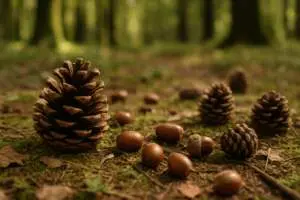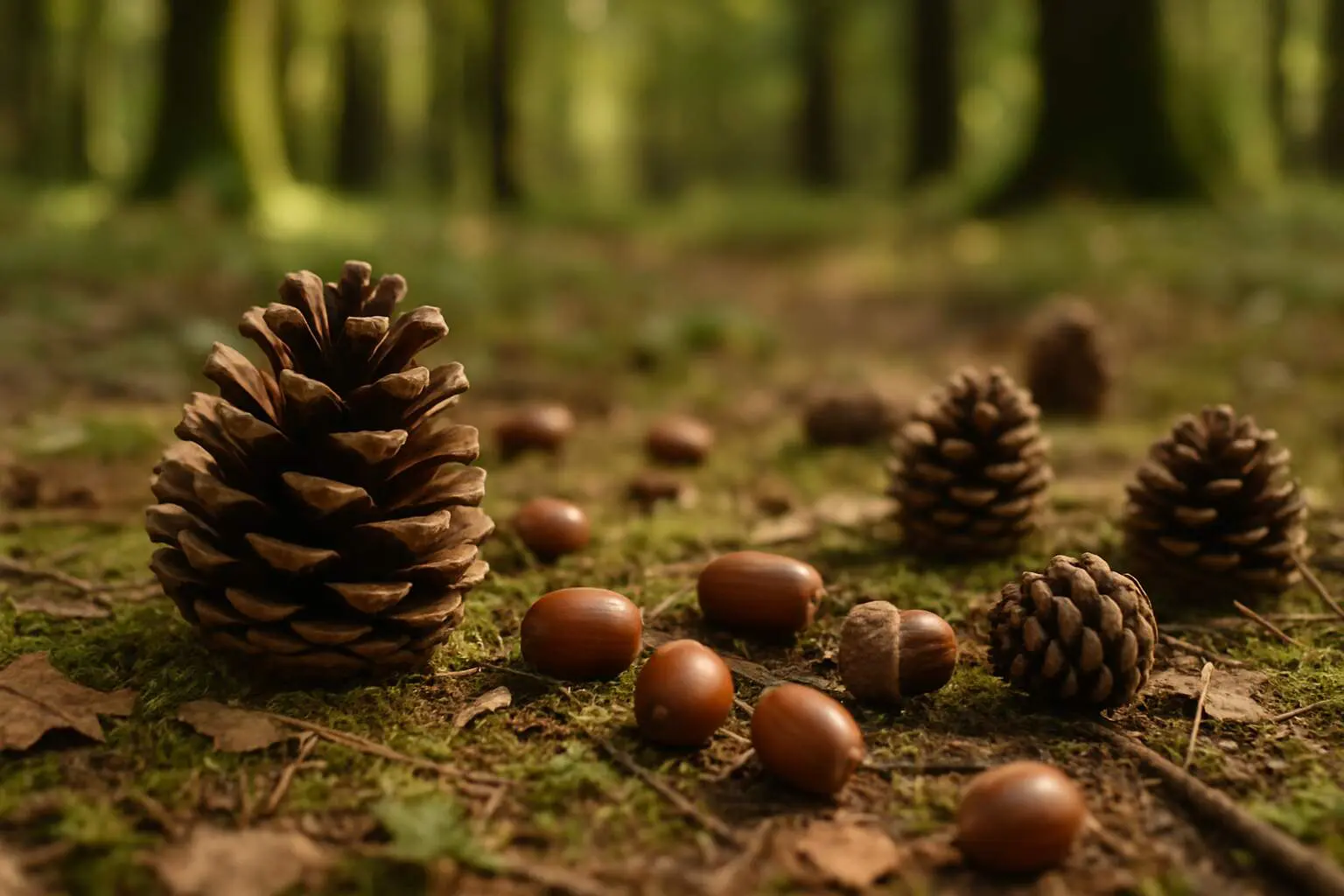
Pine cones and acorns picked up on an autumn walk. I wanted to decorate it as a child's craft or interior decoration, but before I knew it, there was a small insect... In fact, the blessings of nature can contain invisible insect eggs and larvae. In this article, we will introduce in detail the types of insects that occur from pine cones and acorns, the damage, and how to get rid of them reliably. From simple measures you can take at home, such as freezing and boiling and disinfection, to tips to make the natural ingredients you have collected last longer. This is a complete guide to enjoy natural materials without worrying about insects. In the coming season, let's use the treasures you pick up with your children safely for wonderful interiors and crafts.
The Invisible Dangers Lurking in Nature's Treasures
With the arrival of autumn, pine cones and acorns are collected by children in parks and forests. Wonderful natural materials such as those in MY STELLA's picture books are perfect for interior decorations and crafts that give you a sense of the season. But did you know that within those beautiful natural treasures lie unseen dangers?
Types of insects that appear from pine cones and acorns
Pine cones and acorns are actually used by various insects as homes and spawning places. Let's know the main insects that you should pay special attention to.
- Weevils – Make a small hole in the acorn to lay eggs. The larvae grow by eating the contents of acorns, and one day they suddenly appear.
- Earthen beetle – Laid eggs in the crevices of pine cones, and hatched larvae grow inside.
- Chatter beetle – Very small insects that gather in wet acorns and pine cones. Because it is inconspicuous, it is often brought in without being noticed.
- Madara Mega – A type of moth that especially likes pine cones. Sometimes the larvae grow in pine cones and stretch their threads.
Sometimes the souvenirs you pick up with your children become the "home" of these insects. These bugs lurk in eggs and larvae, often so small that they cannot be seen visually.
What happens if you bring it into your house without knowing it? Examples and damage
What problems do you get when you bring natural materials into the room without treatment? Let's learn from actual examples.
Examples of damage at home :
- "A large number of small insects appeared from the pine cones displayed near the children's picture bookshelves, and they spread to the surrounding picture books and wooden toys" (Tokyo, 30s, mother)
- "Insects came out of the acorns I collected to use for Christmas wreaths, and the carpet in the living room was damaged" (Kanagawa, father in his 40s)
- "When I saw the illustrations in MY STELLA's picture book and decorated the pine cones that my children happily collected, they were full of small holes after a week" (Osaka, 35-year-old mother)
The damage is not just a matter of appearance. These insects can multiply and spread to other wood products, food, and clothing. Be especially careful with wooden furniture and flooring.
What you need to know to protect children's crafts and interiors
Let's acquire basic knowledge to protect children's important nature collections and handmade crafts from insects.
Points to check before taking it home :
- Pay attention to where you pick up (there are fewer insects in dry places than in wet places)
- Check for small holes or powdery objects on the surface
- Choose fresh food rather than one that has been on the ground for a long time
- Get ready to safely enjoy nature experiences like those you read in MY STELLA's picture books
Takeout tips :
To minimize insect damage, place pine cones or acorns in a plastic bag as soon as you pick them up and seal them. Even if you leave it in a car or other place where it gets hot for a few hours, it will be a certain amount of insect control. However, this is not perfect, so be sure to properly dispose of it when you bring it home.
In order to safely enjoy the charm of natural materials, it is important to practice the "3 ways to reliably get rid of insects" introduced in the next chapter. With the right knowledge and simple processing, let's enrich your child's experience of nature.
3 ways to reliably get rid of and treat insects
With the arrival of autumn, parents and children happily picked up pine cones and acorns. I often hear from readers of MY STELLA that "insects came out even though I collected them." In order to safely enjoy beautiful natural materials like the world of picture books, 3 ways to reliably get rid of insects I would like to introduce you.
100% safe insect repellent method by freezing treatment
The surest and easiest way is freezing. There is no need to worry about invisible eggs and larvae lurking in pine cones and acorns if they are thoroughly treated at low temperatures.
When you bring home the natural material you have collected with your child, you should first process it in the following steps:
- Lightly rinse off the soil and leaves on the surface of pine cones and acorns with water.
- Gently wipe dry with kitchen paper (no need to dry completely)
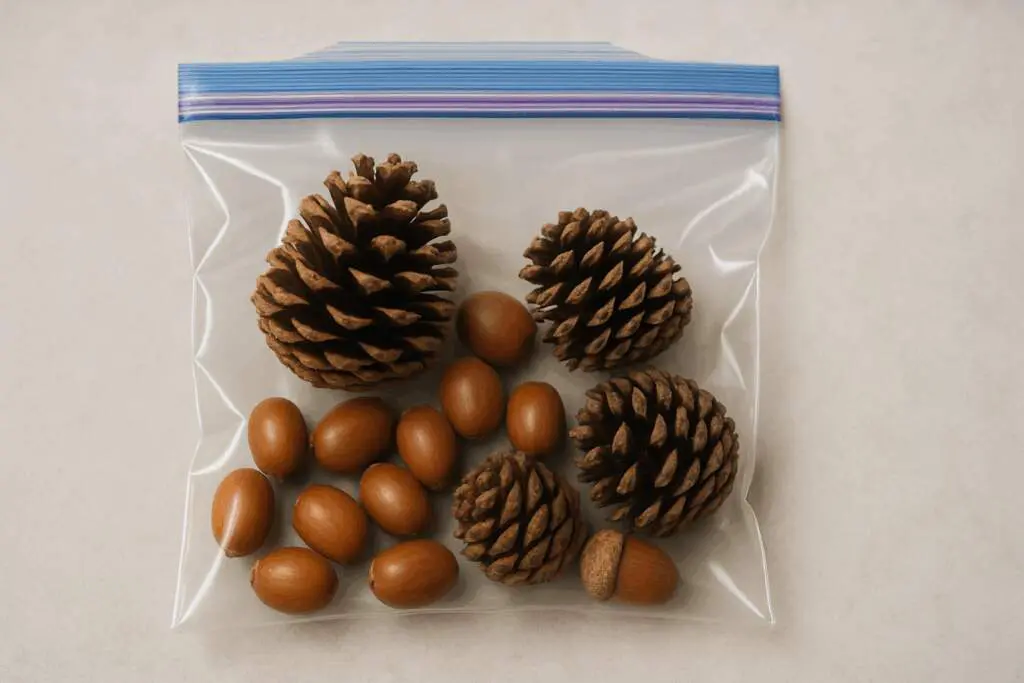
- Put it in a ziplock or other sealable bag to remove air
- Store in the freezer for a minimum of 48 hours, preferably for 1 week
- After taking it out, it will thaw naturally and dry slowly in a well-ventilated shade
The key points of freezing processing are temperature and time is. By keeping it at home freezer temperature (around -18°C) for more than 48 hours, worm eggs and larvae are almost 100% killed. Even if you're in a hurry, freeze it for at least 2 days.
After freezing, natural materials can be safely used for beautiful craft works and seasonal interiors that appear in picture books. Another nice point is that you can carefully preserve the memorabilia you pick up with your parent and child.
Useful boiling and disinfection techniques in a hurry
"I want to use it for tomorrow's crafts!" "I need it for this weekend's children's event!" If you want to use it immediately, boiling and disinfection is recommended. It is a method that can effectively control insects in a short time.
Boiling disinfection procedure:
- Fill a large pot with plenty of water (enough to completely soak pine cones and acorns)
- Add pine cones and acorns and put on medium-high heat
- After boiling, simmer for 5-10 minutes (5 minutes for acorns, 10 minutes for pine cones)
- Turn off the heat and let it cool down naturally
- After taking it out, dry it thoroughly in a well-ventilated place
As a precaution when boiling and disinfecting, pine cones will temporarily close after boiling There may be. But don't rush. If you dry it thoroughly, it will most likely open again. Some readers of MY STELLA have commented, "It was a fun experience to watch the pine cones open with my children."
Also, when boiling, the aroma of pine and lily may spread, so it is recommended to ventilate it. Acorns can change color or crack after boiling for a long time, so about 5 minutes after boiling is enough.
The correct way to control insects by drying and drying in the sun
The most natural way is to dry it thoroughly. However, keep in mind that this method is time-consuming and not a complete insect control. Still, it is useful to know as an option if you find it difficult to boil or freeze for a short time.
Effective drying methods:
- Wash pine cones and acorns lightly with water to remove dirt from the surface
- Dry thoroughly in a well-ventilated place for at least one week on a sunny day.
- Avoid direct sunlight and dry in the shade (to prevent fading and cracking).
- Try to dry it thoroughly, such as turning it over every day.
- Visually check for traces of insects before storage
Drying in the sun alone cannot completely eliminate the eggs and larvae lurking inside There is a possibility. Therefore, it is recommended to combine freezing or boiling in advance for especially important interiors, items that want to be stored for a long time, and craft materials used indoors by children.
Natural materials used for picture book reading time and seasonal displays must be safely processed to enjoy them with peace of mind. MY STELLA plans to provide more information on how to use natural materials to foster children's creativity in the future.
Surprisingly, I don't know! Additional techniques to enhance the effect
In addition to the above three basic methods, here are some additional techniques to make it more effective:
- Cleaning with baking soda water: Dissolve 1 tablespoon of baking soda per 1 liter of water and wash it to increase the sterilization effect
- Oven drying: Heating in a 100°C oven for about 20 minutes can effectively dry and kill insects in a short time
- Use herbs together: Add a small amount of insect-repellent herbs such as lavender and rosemary to the storage bag after drying to provide insect repellent during long-term storage
Whichever method you choose, How to store it after processing is also important is. Store in a well-ventilated container in a place with little moisture. Avoid completely sealing as it can cause moisture to trap and mold.
By following these methods, parents and children can safely enjoy the autumn treasures they have collected for a long time. Please use it to create the experience of "fostering children's curiosity" that MY STELLA values.
Tips for making pine cones and acorns last longer after treatment
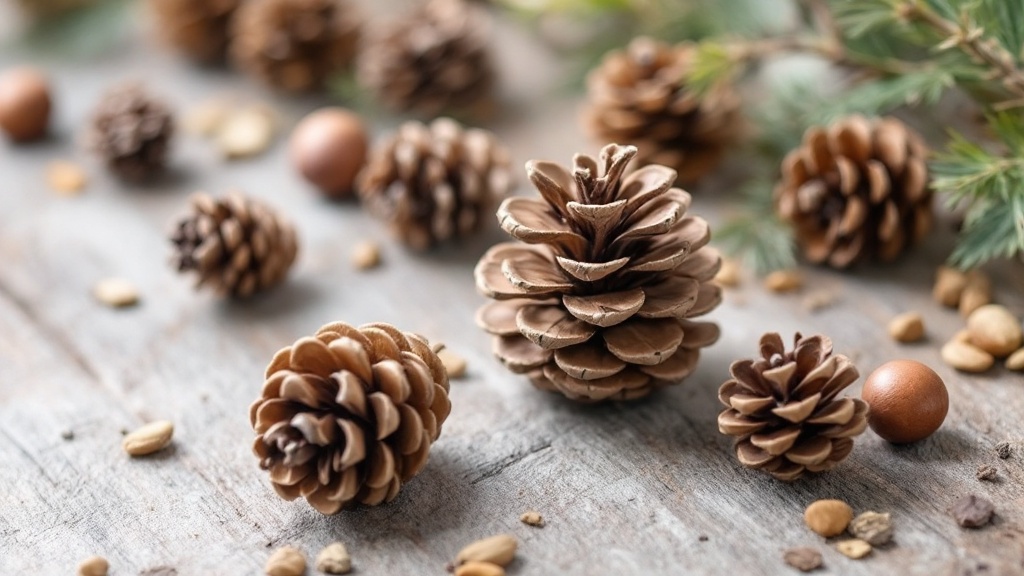
You want to enjoy the treasures you pick up on your nature walk in a beautiful state for a long time even after being treated with insect control. Pine cones and acorns collected with children can be kept beautiful for more than a year with proper care. The MY STELLA editorial department will introduce preservation techniques to enjoy seasonal displays and children's crafts for a long time.
How to revive a deflated pine cone
Pine cones after freezing or boiling and sterilization can deflate with moisture. But don't worry! Restoring the original open and beautiful appearance with the correct drying method You can do it.
3 revival methods to make pine cones open reliably
- ✅ Natural drying method – Dry slowly in a well-ventilated shade for 2-3 days (hurry is the secret to success)
- ✅ How to use the oven – Heat in the oven at 100°C for about 15 minutes (keep an eye on the situation and monitor the situation frequently).
- ✅ How to use heating – Place near air conditioners or heating appliances (in a position where they do not hit directly) and dry gradually.
Especially if you want to make a wonderful Christmas decoration like the world of a picture book with a child, the beauty of an open pine cone is essential. MY STELLA staff recommendations are: Revival method using desiccant is. Just put it in an airtight container with the desiccant and it will open naturally.
How to create a storage environment that protects against mold and moisture
The main enemy of pine cones and acorns that have been treated is "moisture". If you don't create a proper storage environment, the natural materials will become moldy. Even in Google search trends, there are many searches such as "pine cone mold control" and "acorn long-term storage".
5 golden rules for creating a mold-free storage environment
- 🌟 Choosing a breathable container – Ideally, a container with a slight air swap rather than a complete seal
- 🌟 Humidity control is paramount – Aim for a humidity of 50% or less in the storage area.
- 🌟 Regular sunbathing – About once a month, blow the wind in the shade to let moisture escape.
- 🌟 Use of mold inhibitors – Store commercial mold inhibitors and handmade baking soda packs together
- 🌟 Places with low temperature changes – Places with severe temperature changes can cause condensation.
In order not to have the sad experience of "failing to take measures against moisture and the acorns carefully collected by children are full of mold...", Choose a storage location especially carefully 。 Choose a place that does not attract moisture, such as a closet, the top of a closet, or a bookcase.
Care for seasonal interior decoration to enjoy all year round
Processed pine cones and acorns can be enjoyed not only as a preserve, but also as a seasonal interior. Why don't you enjoy decorating the four seasons with the inspiration you get from picture books with your children?
How to enjoy pine cones & acorns by season
- 🍁 Autumn outfit – Warm display combined with nuts and fallen leaves
- ❄️ Winter glow – Color with silver or gold spray for Christmas wreaths and ornaments
- 🌷 Spring colors – Color in pastel colors and use it for Easter decorations
- ☀️ Cool in summer – Cool in a glass container for a natural summer interior
Especially popular is the craft that resembles a pine cone as a Christmas tree. MY STELLA also proposes seasonal craft ideas linked to picture books that foster children's creativity. Crafts using natural materials A great opportunity to nurture children's sensibilities and creativity is.
4 techniques to enjoy while making it last longer
- ✨ Coating Treatment – Coated with non-toxic varnish or clear spray for increased moisture protection
- ✨ Ideas for where to display – Choose a location that is not directly exposed to direct sunlight or heating winds
- ✨ Out-of-season storage – During the season when not in use, it is treated with insect and moisture proof and stored in a special box.
- ✨ Coloring ingenuity – Acrylic paints last longer than water-based paints
Even if you want to use the Christmas pine cone decoration you used last year again, it can be reused with simple maintenance. If you take good measures against insects and mold, You can enjoy the interior made of natural materials filled with family memories for years to come 。
The time spent reading picture books with children and enjoying the creation of seasonal displays will be an irreplaceable family memory. MY STELLA regularly introduces seasonal craft ideas that parents and children can enjoy using natural materials, so be sure to check them out.
Conclusion
Pine cones and acorns found on autumn nature walks are wonderful natural materials that give you a sense of the season.
But in fact, it is also ♪ a home for many insects.
Freezing is the most effective way to eliminate such worries. Simply freeze well in the home freezer at -20°C for 2 days. If you are in a hurry, you can also boil and disinfect. Just soak it in boiling water for 30 minutes to prevent insects. Drying in the sun takes time, but it is a method that can be tackled with your child. After treatment, the trick is to avoid moisture and store in a well-ventilated place. Wilted pine cones are revived when soaked in glycerin solution.
Please use it for Christmas wreaths and autumn decorations. There are many places in Tokyo where you can find wonderful materials, such as the national Showa Memorial Park and Yoyogi Park. Take the treasures of nature home safely and enjoy a wonderful craft time with your parents and children.