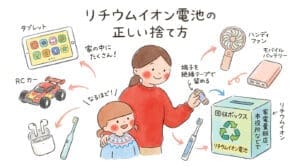
Old mobile batteries, Don't you throw away your children's toys as trash, even though they are dangerous? I also thought so. However, if you mistake the disposal method for lithium-ion batteries, it can lead to accidents that involve your family. The correct method is simpler than you think. First, check the rules of your local government. Let's confirm together.
What about that mobile battery, isn't it just thrown away as garbage?
"Nantonaku" can lead to serious accidents
Don't just throw it away, sort it properly.
Plastic, burnable garbage, non-burnable garbage - It is a great change to handle everything completely.
However, there is one thing that cannot be "disposed of" just like that.
This is a product that contains a lithium-ion battery.
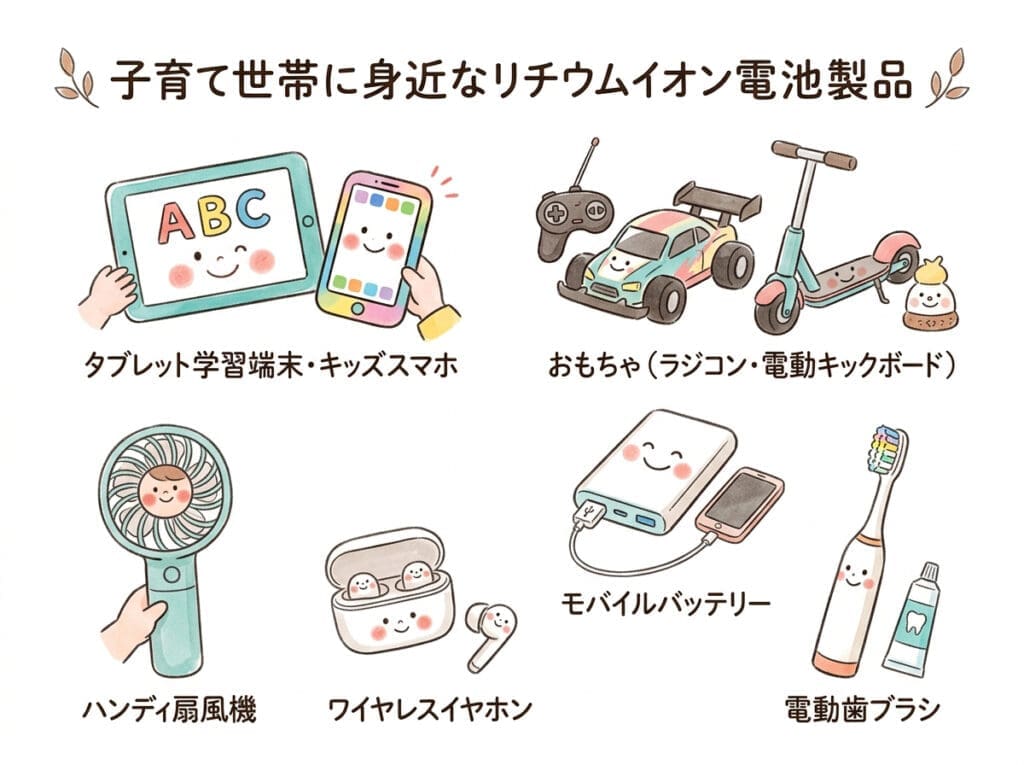
Smartphones, mobile batteries, electric toothbrush, wireless earphones, etc. are used in many of the devices around us.
If you dispose of them as regular trash, they will be crushed in the garbage truck, the interior will short-circuit, and there is a danger of ignition. In fact, many garbage truck fires are caused by rechargeable batteries such as lithium-ion batteries.
Fires have been reported during collection, and workers have been caught in the flames.
I don't think of it as 'my own household garbage?'. However, there are cases where it becomes the cause of a fire. Therefore, it is important to 'not throw it away carelessly'.
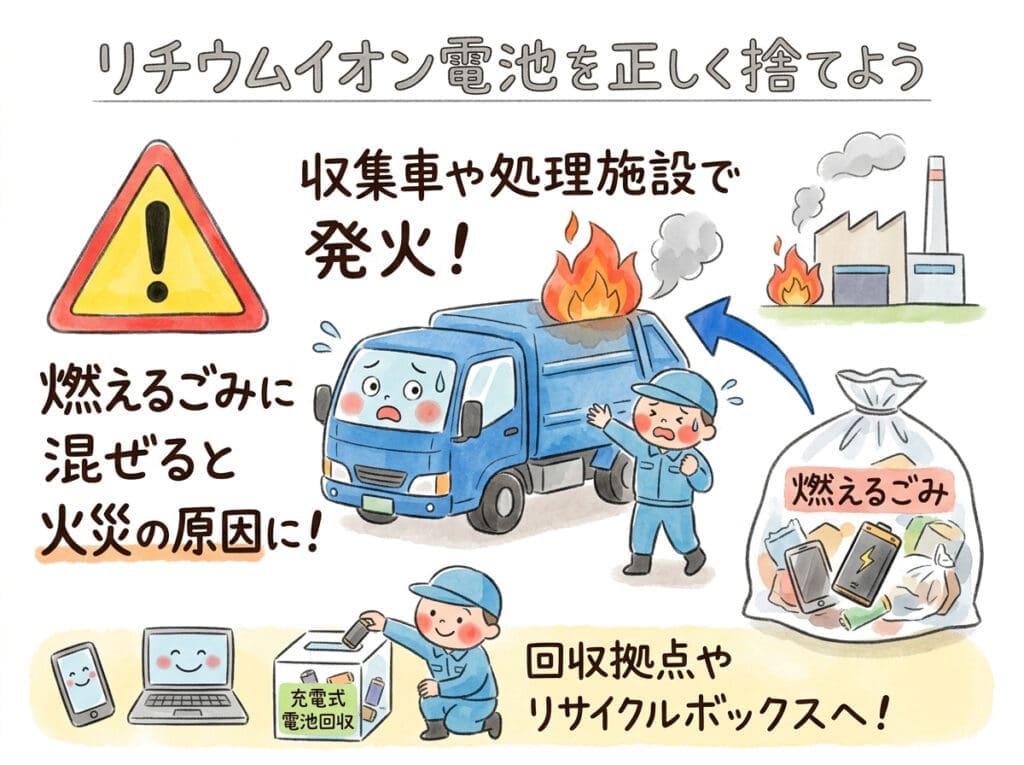
Lithium-ion batteries are dangerous - family gets involved due to disposal method
When will swelling/fire occur? The risk of hidden danger near devices you carry
The danger of lithium-ion batteries is not just at the moment of disposal. Used batteries can swell during storage. Have you ever experienced your smartphone back bulging or your mobile battery deforming? That is a sign of "swelling."
Swollen batteries can cause fire or rupture with slight pressure or impact. Putting them in a garbage bag and waiting for collection is already risky. Damaged batteries require special attention.
Also found in children's toys and learning tablets
These are batteries incorporated into products that are convenient for families raising children. Rechargeable electric toys, learning tablets, and educational robots—most of these use lithium-ion batteries.
When toys are broken and you think, "I don't need it anymore, so let's throw it away," do you put the battery in the bag as is? Many products with built-in batteries cannot be removed, and they are simply discarded. When discarded, they can cause accidents during post-collection processing. To ensure children can spend their time safely, it is important to know how to dispose of them. Special care is required for used batteries.
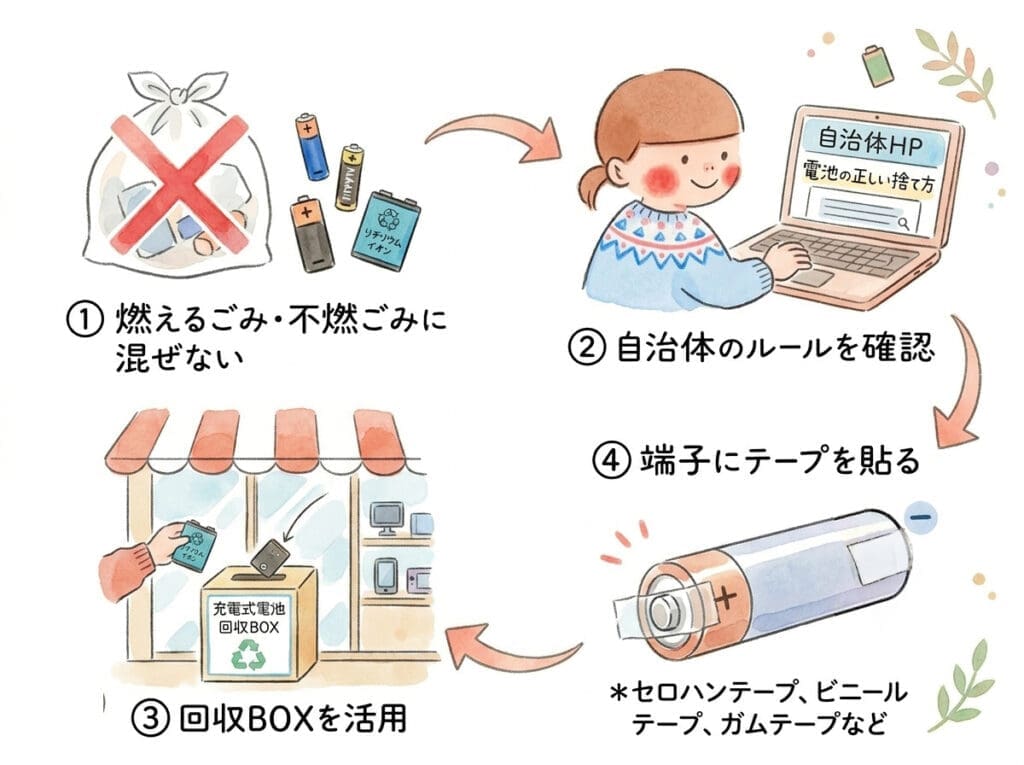
Proper disposal of lithium-ion batteries — Confirm safe disposal methods
Small rechargeable battery disposal rules (Please confirm this first)
Lithium-ion batteries and other small rechargeable batteries have different disposal methods depending on the municipality. First, please confirm the disposal rules of the municipality where you live.
However, what is common in many municipalities is that "lithium-ion batteries are not disposed of as regular garbage." Regardless of burnable or non-burnable garbage, disposing of them as is is fundamentally NG. If you are unsure, using a collection box or store collection is safe.
The safest way to bring it to a JBRC collection cooperation store
The most reliable and safe method is JBRC (The Recycling Network for Consumers) This is a collection box for the recycling cooperation store. Here, the recycling mark for nickel-metal hydride batteries is displayed. JBRC is a general incorporated association that promotes the recycling of small rechargeable batteries, and collection boxes are installed at home electronics stores and home appliance retailers nationwide.
The batteries that are targeted are the following 3 types.
- Lithium-ion battery
- Nickel Metal Hydride Battery
- Nickel-metal hydride battery
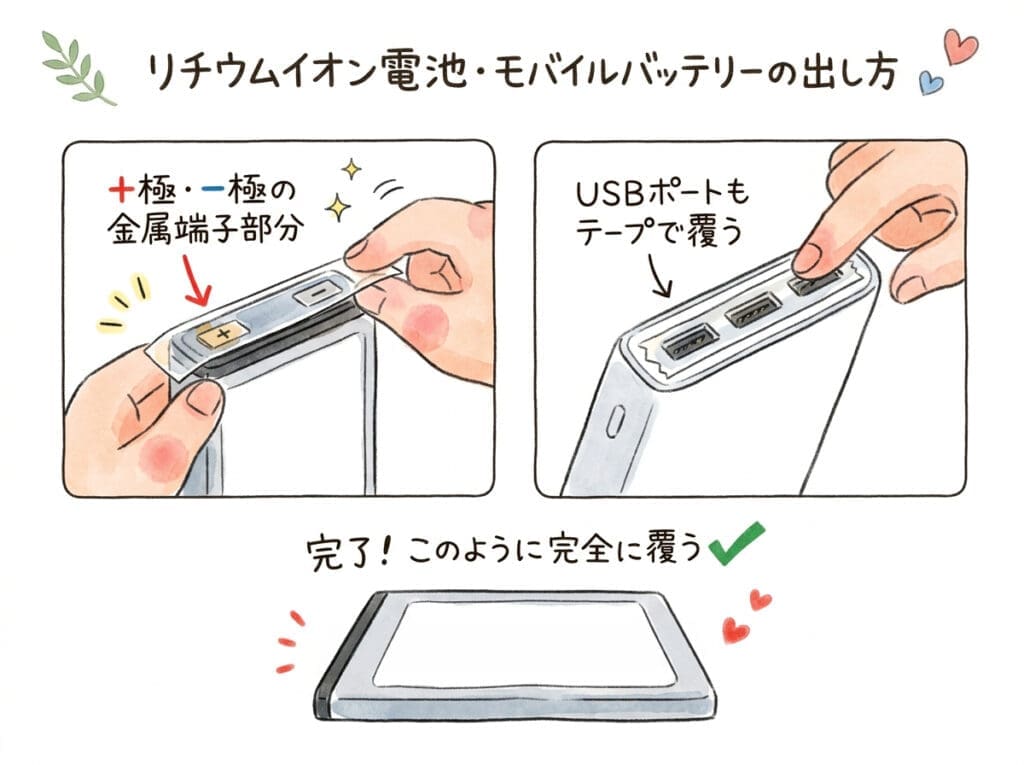
Many rechargeable devices such as mobile batteries and electric products are targeted. When carrying them, please tape the terminal part and insulate it. If the metal part touches, it will short-circuit and become a cause of fire.
Checklist for removing mobile batteries.
- 1. Insulate the terminals with tape
→ Prevents short circuits and ignition due to contact with metal parts - Choose how to dispose of it
→ Batteries only: JBRC collection box
→ To smartphone: To the carrier shop
→ Small home appliances: Municipal collection boxes or stores - Confirm if abnormal
→ If swollen or damaged, do not put in collection box; consult store or municipality
Before discarding "nantonaku", please confirm these three points.
Attention for devices with lithium-ion batteries - Products outside the scope of JBRC / blind spots
Products that are outside the scope of JBRC collection
Not all products can be put into JBRC collection boxes.
Products that require special attention are as follows.
- Home appliances with built-in batteries that cannot be removed
- Smartphone body
These are not eligible for collection boxes, so Collection programs for stores and manufacturers, or small home appliance collection by municipalities Please do.
"Because I don't know how to dispose of it, I'll just leave it there" - this situation can leave risks in the home. Please confirm the disposal method promptly for unused mobile phones or old home appliances.
Damaged/swollen batteries require confirmation before carrying
If the battery is swollen or the casing is damaged, do not put it in a collection box. There is a danger of fire during storage or transportation.
In such cases, it is safe to consult with stores or municipal windows. If you are unsure, please confirm the appropriate disposal method yourself.
Disposal of Lithium-ion Batteries: Summary of information for safe disposal
3 things to do before discarding
Before disposal, please confirm the following three points.
- 1. Confirm if swollen/damaged
→ If deformed or leaking, do not put in collection box; consult store or municipality - Insulate the terminals with tape → If the metal parts touch, it will short-circuit and cause a fire
- Choose the correct disposal method
→ Batteries only: JBRC collection box
→ To smartphone: To the carrier shop
→ Small home appliances: To the municipality's collection or retailer
By confirming these three points, we can greatly reduce the risk of accidents.
If you don't know, take it to the municipality's counter.
If you are unsure about "Where should I put this?", please check the website of your local government or official site. In many local governments, you can search for the correct disposal method by entering the item name in a separate search tool.
Disposing of lithium-ion batteries is not particularly difficult. The important thing is whether you "know the correct method." Do not burn them, do not short-circuit the terminals, and choose an appropriate disposal method. By observing these basics, the risk of accidents can be greatly reduced.
In order to protect the environment where children can live with peace of mind, please take a little look at how you dispose of your trash every day.
Please also refer to the following video.
- Ministry of the Environment "Safe Recycling! (Video on how to dispose of correctly)" (YouTube)
- Environmental Information Channel [Chiba Prefectural Environmental Research Center] "Flame? How to dispose of lithium-ion batteries Is it right?" (YouTube)
We at MY STELLA deliver original picture books that contribute to the growth of your children. Protecting the environment where children can live safely is also one of our important roles. From now on, we will also convey information that leads to the peace of mind of children and families.