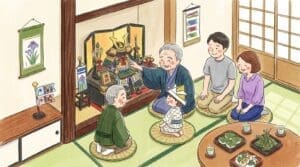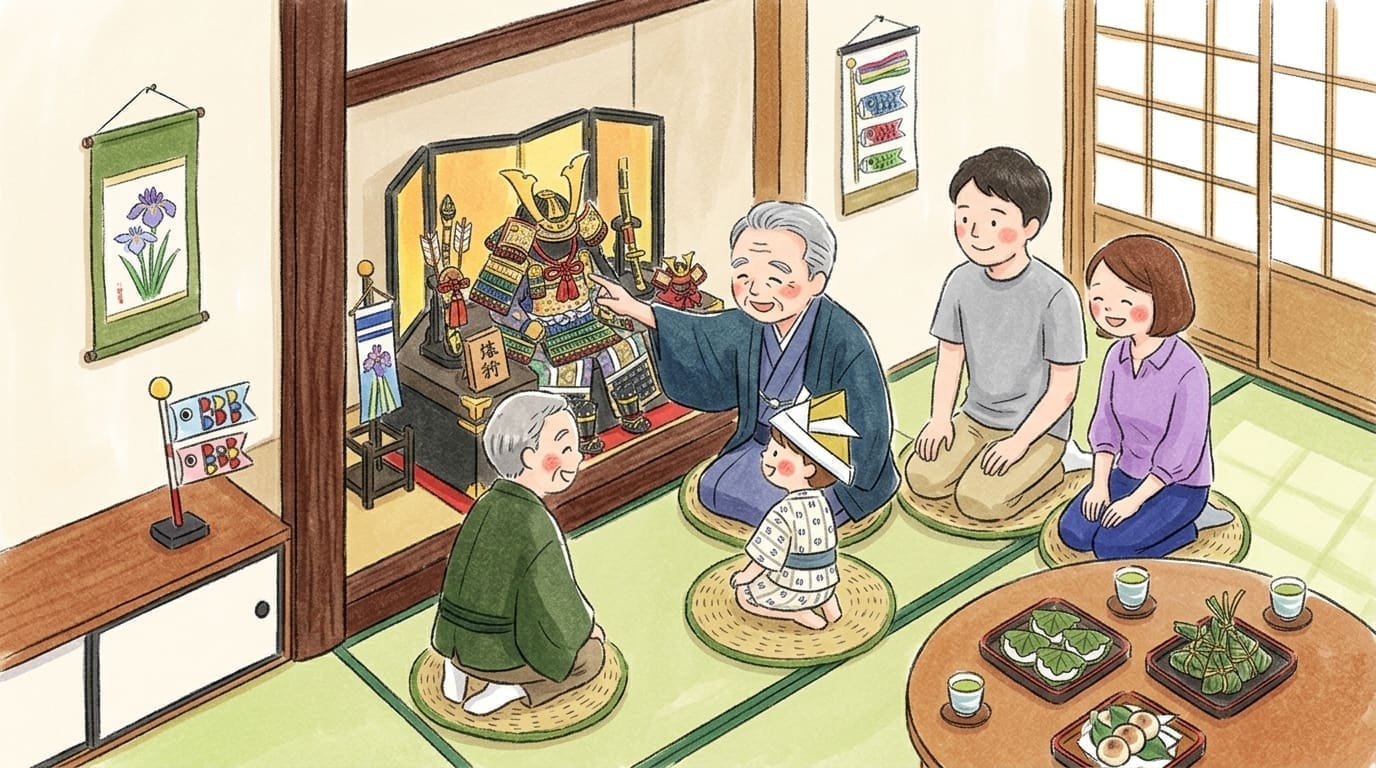
As May 5th approaches, I start to feel a little restless.
What should we do on Children's Day? Every year it just seems to arrive without much planning, but wouldn't it be nice to have something to tell the children? Many people probably feel this way.
At first, I saw the koinobori and thought, "Oh, it's almost Children's Day I felt like, "Oh, really?" But as my mother-in-law and grandfather taught me about traditional customs, I've come to deeply feel that these events are filled with many wishes.
Children's Day is Japan's National Holiday was established in 1948. It's a day imbued with the meaning of "respecting the personality of children, ensuring their happiness, and thanking mothers." It's a holiday not just for boys, but for all children.
What do you do on Children's Day? Ideas for how our family spends it
There are actually many ways to enjoy Children's Day.
Traditional Tango no Sekku (Children's Day) You can incorporate the custom of, or enjoy it in a modern way. The important thing is to spend special time together as a family. It's good to find a way that works for our family without overdoing it.
Here are some classic ways to spend the day.
- Koinobori (carp streamer) or decorating with May dolls
- Iris bath wishing for good health and longevity by entering
- Kashiwa mochi (rice cake with oak leaves) and chimaki eating
- Going out with family and enjoying events
- Preserve your child's growth in photos
If you try even one of these, it will become an annual habit.
Ways to Enjoy from Infancy
It's the baby's first Children's Day. Many families celebrate it specially as Hatsusekku (first seasonal festival), right?
But babies don't understand anything yet, and you might wonder what to do. I felt the same way at first.
What I found beneficial after actually doing it was to leave records. Taking photos in front of the May doll, or having the whole family gather for a meal. Even if the baby won't remember it, when they grow up, they'll know, "This is how I was celebrated." I think that alone is enough.
Even just placing a small carp streamer decoration in the room creates an atmosphere. If you have a compact carp streamer for the balcony, you can even display it on aマンション, right? Seeing the baby look up with sparkling eyes makes me feel happy somehow.
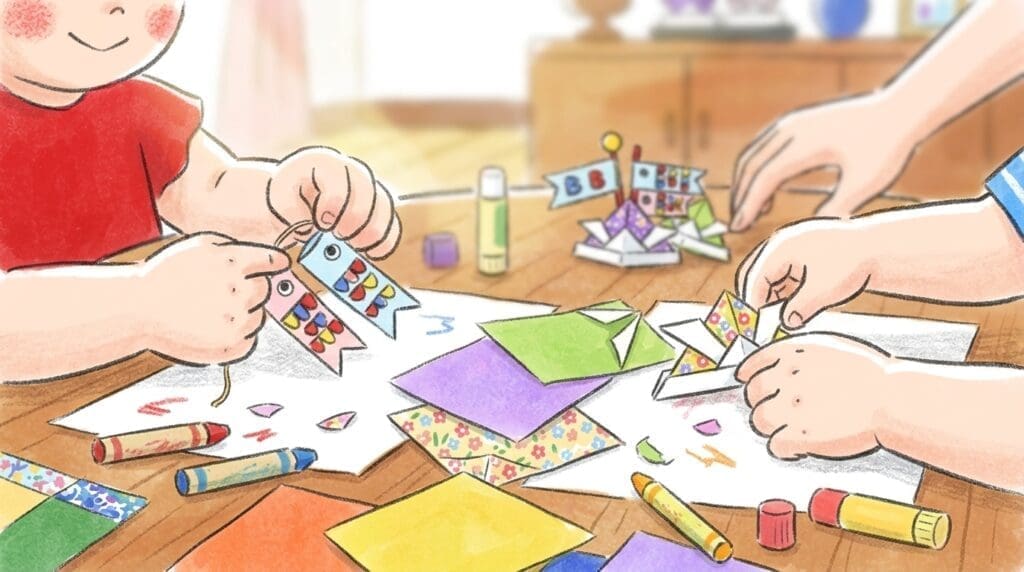
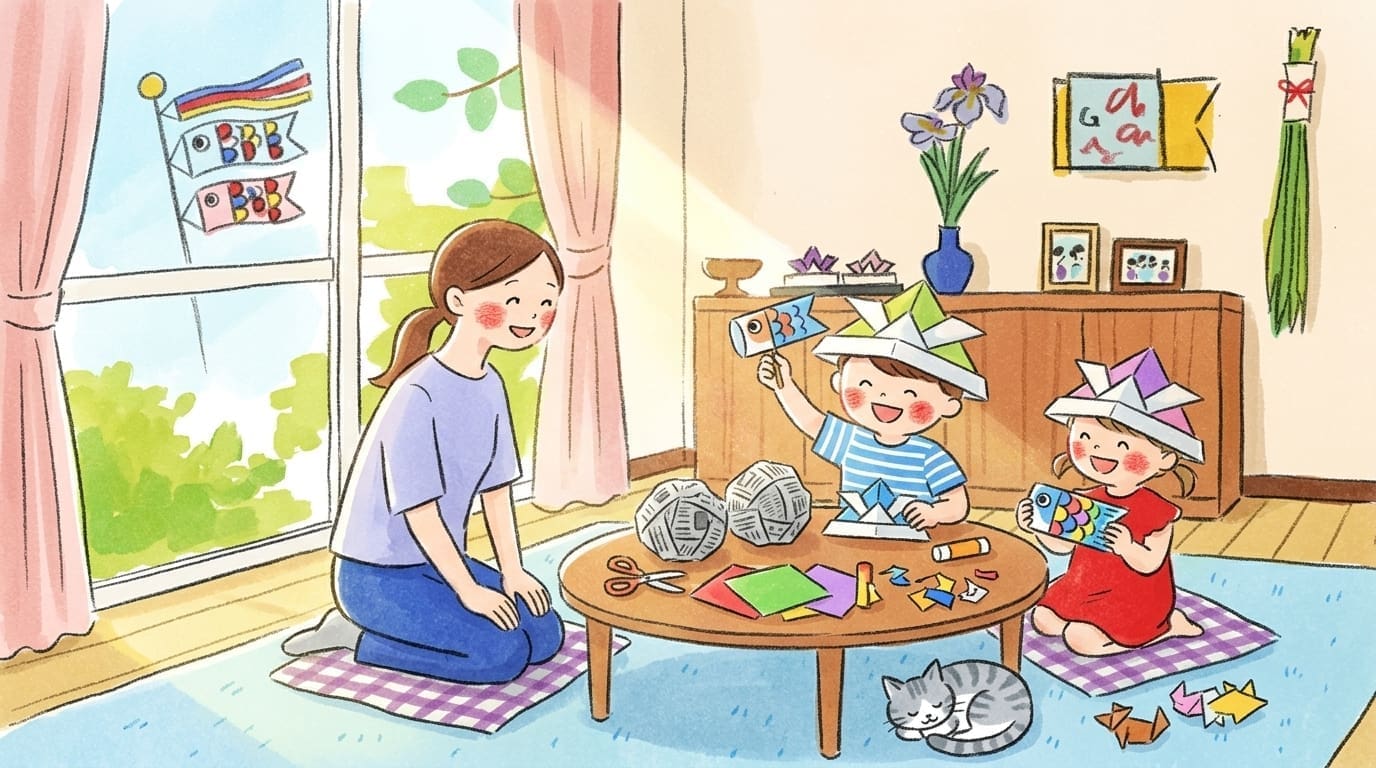
As children approach preschool age, the number of things you can enjoy together increases significantly. Making helmets out of origami, or koinobori (carp streamers) out of paper cups Even simple crafts make children very happy. Decorating what you've made makes it an even more special day.
Celebrating Tango no Sekku with Grandparents
About the iris bath, as taught by my mother-in-law.
'In the old days, we used to take iris baths and wish for good health,' my mother-in-law casually told me.
I thought, "Is that so?" and immediately decided to try Shobu-yu (iris bath) with my family. In the bath Iris Floating the leaves in the bath with the children makes it a special time, somehow different from usual. It has a unique aroma, and I deeply felt that this is a custom that has continued since ancient times.
The custom of drinking iris baths is said to have originated in China. Irises were believed to have the power to ward off evil spirits, and by adding them to the bath, people wished for the healthy growth of their children.
Grandparents' generation knows a lot about these traditional events. Since it's an opportunity, it might be nice to spend time together and listen to stories from the past. Gathering at the same time every year can also become a wonderful habit, can't it?
Some families also exchange gifts. Grandparents might give koinobori or May dolls, or they might share records of their children's growth. The time spent connecting across generations is irreplaceable.
Classic foods to eat on Children's Day
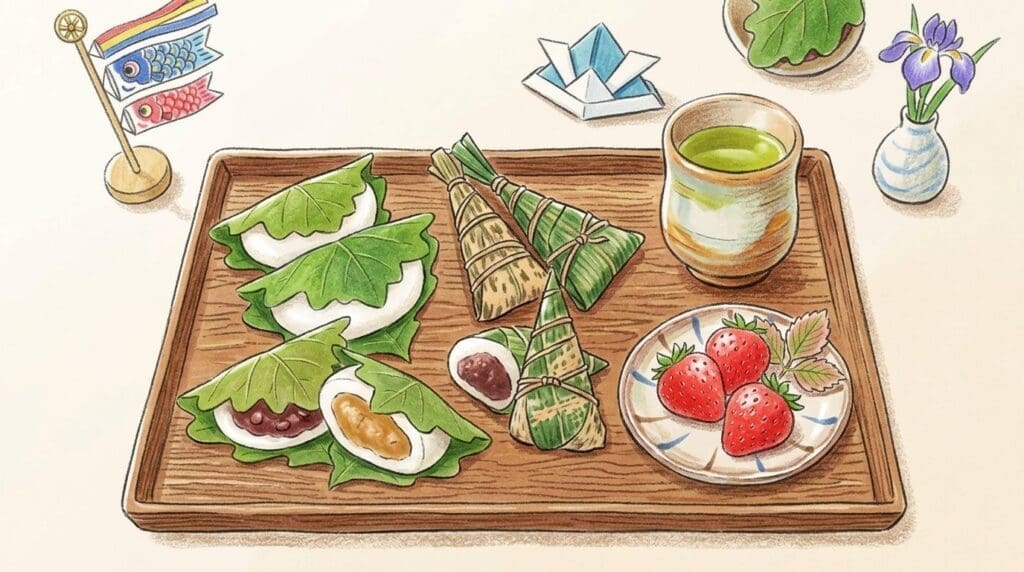
If asked what people eat on May 5th, kashiwa mochi and chimaki immediately come to mind.
Did you know that what people eat differs between the Kanto and Kansai regions?
In the Kanto region, kashiwa mochi is standard, while in the Kansai region, chimaki is standard. Of course, it's okay to eat either. Recently, it seems that more and more families are enjoying both.
Chimaki is a food that originated in China. The mochi wrapped in bamboo leaves is also cute in appearance and will delight children. It has the meaning of warding off evil spirits and is a lucky food that is indispensable for the Tango no Sekku festival.
Cakes for Children's Day are popular these days, too. Like roll cakes shaped like koinobori (carp streamers) or cakes with kabuto (samurai helmets) as motifs. Even children who don't like Japanese sweets will happily eat cake.
Some families also make dishes using bonito and bamboo shoots. They might use
Enjoying Kashiwa mochi and auspicious sweets with children
What my grandfather told me while we were eating kashiwa mochi.
He happily told me, "This leaf has a special meaning, you know."
The old leaves don't fall until new buds emerge, so it's a symbol of prosperity, meaning the family line will not be broken. Wow! I didn't know that! Kashiwa The wish for prosperity of descendants was put into the leaves.
Every time I eat kashiwa mochi, I remember my grandfather's smile.
The bean paste inside also varies by region. Smooth bean paste, chunky bean paste, miso bean paste. It's fun to compare with your children to see which one is the most delicious, isn't it?
When you go to a Japanese confectionery shop, you'll find many special sweets available only during this season. There are nerikiri shaped like carp, and dry sweets shaped like helmets. Enjoy them with your eyes and then with your taste buds. For children, it's an experience of feeling the season through food.
Buying them at the store is fine, but making them together also creates memories. Even just making shiratama dango (white rice flour dumplings) and topping them with anko (sweet bean paste) makes a splendid Children's Day treat. They seem to taste even better with the sense of accomplishment from 'I made this myself!'
Why do we display May dolls and helmets? The origin we want to convey to our children
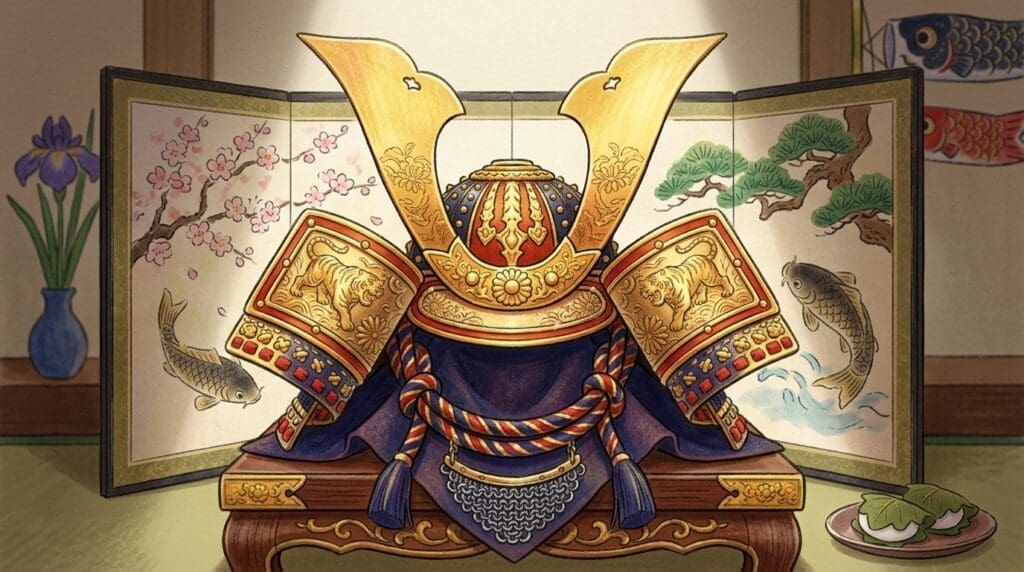
If asked why you display a May doll, can you answer properly?
At first, I could only say, "That's just how it's done." But after learning the origin, my feelings about decorating changed.
Helmets and armor for May dolls were originally displayed in samurai families. In the Edo period, they also became popular among commoners. These martial arts items are imbued with the wish to "protect children from harm." Since they were used to protect oneself in battle, they served a role similar to amulets.
Koinobori also have a specific meaning.
There's an old Chinese story about a carp climbing a waterfall and turning into a dragon. That's why carp symbolize success. It represents the parents' wish for their child to grow up healthy and strong, and to overcome difficulties without being defeated.
The five colors of the streamers are said to have the meaning of warding off evil. The more you learn, the more you feel the thoughts of people from long ago.
When putting out the decorations, it's also good to ask your child, "Why do we put these up?" Telling them, "It's a wish for you to grow up healthy and strong," might help the child feel that they are cherished.
The Difference Between Tango no Sekku and Children's Day
Tango no Sekku and Children's Day are both on May 5th, but there's actually a difference between them.
Tango no Sekku is an event that originally came from China. It's a traditional event in Japan that has continued since the Nara period, and it was a celebration wishing for the healthy growth of boys. In samurai society, iris was associated with 'Shobu' (honoring martial arts), so it was particularly valued.
On the other hand, Children's Day is a national holiday. It's a relatively new event, established in 1948.
The big difference is the children対象. Tango no Sekku is a celebration for boys, but Children's Day is a day to celebrate all children, both boys and girls. The purpose, as defined in the Law Concerning National Holidays, is 'to respect the personality of children, to promote their happiness, and also to thank mothers.'
So, even in families with girls, you can proudly celebrate Children's Day. March 3rd Hinamatsuri (Jōshi (Tango no Sekku) is a celebration for girls, so it's often thought that May 5th is only for boys, but Children's Day is for everyone.
The culture of Children's Day, passed down through generations. I hope I can pass it on to my children like this. It may be small things, but I think the accumulation of these is surely important.
Every year around this season, I pause and think. That my children are healthy and growing up happy. That in itself is the greatest celebration.
You don't need to overthink it. Start with what you can do, little by little. I hope we can enjoy Children's Day while cherishing the time we spend as a family.